Sonnar 250mm f/5.6
Carl Zeiss · Hasselblad V · 1957 · Sonnar
Also known as: Zeiss Sonnar 250mm f/5.6 · Carl Zeiss Sonnar T* 250mm f/5.6 · Sonnar 5.6/250 · Sonnar 250/5.6 · Hasselblad 250mm Sonnar · Hasselblad 250mm f/5.6 · Sonnar C 250mm · Zeiss Sonnar CF 250mm f/5.6 · Sonnar 250/5.6 CF · Sonnar T* 5,6/250 CFi · Hasselblad 250mm C T*
Variants & identification
| Variant | Mount | Years | Serial ranges | Production |
|---|---|---|---|---|
| Sonnar C 5.6/250, chrome (1957 baseline) · Synchro-Compur, 1s–1/500 and B | Hasselblad V | 1957–1969 | — | — |
| Sonnar C 5.6/250, black (non-T*) · Synchro-Compur, 1s–1/500 and B | Hasselblad V | 1969–1973 | — | — |
| Sonnar C T* 5.6/250 · Compur size 0 interchangeable reflex shutter with automatic iris diaphragm (Synchro-Compur, 1s–1/500 and B) | Hasselblad V | 1973–1982 | — | — |
| Sonnar CF T* 5.6/250 · Prontor CF, 1s–1/500 and B | Hasselblad V | 1982–1998 | — | — |
| Sonnar CFi T* 5.6/250 · Prontor CFi, 1s–1/500, B and F | Hasselblad V | 1998–2013 | — | — |
- Element and group counts, weights, exact focal lengths, closest focus and filter series come from the Zeiss data sheets hosted by Hasselblad Historical (C250, CF250, CFi250).
- Generation start years follow the barrel and shutter families across the whole V line (C 1957, T* 1973, CF 1982, CFi 1998); no source consulted gives a month for the 250's own changeovers, and old stock overlapped the new.
How to tell them apart
- The letter after the focal length is the generation: none or C (Synchro-Compur, 1957–82), CF (Prontor CF, 1982–98), CFi (Prontor CFi, 1998–2013). There is no F, FE or CB 250mm f/5.6 — the shutterless long lens was the Tele-Tessar 250mm f/4
- Filter mount is the quickest sort: bayonet-50 on every C, bayonet-60 on CF and CFi
- Red T* on the name ring from about 1973; chrome barrels are always pre-T*, but black C lenses without T* exist
- Every version is 4 elements in 3 groups, 2.5 m closest focus and f/45 minimum aperture — a Superachromat in the same focal length and aperture is a different, six-element lens and is engraved Superachromat
Sonnar C 5.6/250, chrome (1957 baseline):
- Satin-chrome barrel engraved Carl Zeiss / Sonnar 1:5.6 f=250mm; no red T* on the name ring
- Synchro-Compur size 0 with the EV interlock — the aperture and shutter-speed rings move together until the cross-coupling lever is pressed
- Bayonet-50 filter mount (Zeiss data sheet: 'bayonet for Hasselblad series 50'); 2.5 m closest focus; aperture scale runs 5.6-8-11-16-22-32-45
- Red-ink Zeiss date code inside the rear mount — pre-1980 the last two digits are the month and the leading digit(s) plus 1957 the year
Sonnar C 5.6/250, black (non-T*):
- Black-anodised barrel with the same C-type engraving, EV interlock lever and bayonet-50 filter mount as the chrome lens
- No red T* after the Sonnar name — a short transitional window, since the black finish and the multicoating arrived within a few years of each other
Sonnar C T* 5.6/250:
- Red T* on the name ring; black barrel; bayonet-50 filter mount; EV interlock lever
- Zeiss data sheet: cat. no. 101026, 4 elements in 3 groups, 930 g, exact focal length 248.4 mm, 2.5 m closest focus, diagonal field 18°
Sonnar CF T* 5.6/250:
- Prontor CF shutter in a black barrel with rubber focusing grip; bayonet-60 filter mount replaces the C lens's series 50
- Green F on the shutter-speed ring — the setting that holds the leaf shutter open for a 2000- or 200-series body's focal-plane shutter
- EV interlock is a push-button on the aperture ring rather than the C lens's lever
- Zeiss data sheet: cat. no. 10 11 15, 4 elements in 3 groups, exact focal length 248.4 mm, 1000 g, 2.5 m, reproduction ratio 0 to 1:7.8
Sonnar CFi T* 5.6/250:
- CFi engraved after the focal length; bayonet-60 filter mount; 1000 g; no databus contacts (the contact-carrying 250 was the Superachromat CFE)
- Zeiss data sheet: cat. no. 10 11 37, 4 elements in 3 groups, 2.5 m, 1:7.8, exact focal length 243.4 mm — 5 mm shorter than the figure the C and CF sheets give
- Sonnar C 5.6/250, chrome (1957 baseline): The long lens of the 500C system from its first year. No Zeiss sheet for the chrome version was consulted here; the C sheet describes the later T* lens, and its 4-elements-in-3-groups computation is the one the family kept to the end. The end year given is the point at which black barrels appear across the C range, not a documented changeover for the 250 itself.
- Sonnar C 5.6/250, black (non-T*): A finish change rather than an optical one. No source consulted here gives a serial boundary for the chrome-to-black transition on the 250, and the black non-T* lens is the scarcer of the two black C versions.
- Sonnar C T* 5.6/250: The multicoated C lens, and the version the Zeiss C sheet documents. The sheet's own summary is unusually flat: 'even at full aperture the image quality of this lens is excellent and cannot be improved any further by stopping down', with portraiture, long-range, press, sports and stage photography named as the applications.
- Sonnar CF T* 5.6/250: The 1982 rebarrelling around Prontor's CF shutter; the sheet repeats the C text almost word for word and makes no claim of floating elements, aspheric surfaces, special glass or apochromatic correction. The lens gains 70 g over the C.
- Sonnar CFi T* 5.6/250: The last version. Its sheet adds a claim the earlier ones do not make: 'the optical materials chosen make this lens very unsusceptible to thermal fluctuations, so it can be safely used in radiant heat from direct summer sunshine, heavy industry furnaces, jet propulsion test beds, rocket launch sites and the like'. Element and group counts are unchanged, so whether the glass was altered or the shorter exact focal length is a sheet error is not stated anywhere consulted here.
Serial-range notes
- red-ink code inside the rear mount, pre-1980
- Zeiss stamped a date code inside the rear of the mount: before 1980 the last two digits are the month and the leading digit(s) plus 1957 the year, so 1611 reads as November 1973. The lens serial itself is a Zeiss running number, and no published block-to-year table for the 250 was found.
- red-ink code inside the rear mount, 1980 onward
- From 1980 the code is two reversed year digits and a month letter, A = January — so a CF 250 reading 48C was made in March 1984.
Specifications
- Formula
- Sonnar
- Construction
- 4 elements / 3 groups
- Aperture range
- f/5.6–f/45
- Shutter
- In the lens: Synchro-Compur size 0 on the C versions, Prontor CF from 1982 and Prontor CFi from 1998, 1s–1/500 and B, flash sync at every speed
- Min. focus
- 2.5 m
- Weight
- 930 g
- Years manufactured
- 1957–2013
- Country
- West Germany (Carl Zeiss, Oberkochen); Germany from 1990
- Coating
- Single-coated on the chrome and early black C lenses; T* multicoating from about 1973 on the C T*, CF and CFi
What reviewers say
- Learn Film Photography (blog) — Exceptionally sharp with an almost complete absence of chromatic aberration even at full aperture, and small and light enough to hand-hold — the modest f/5.6 limits it in low light, but it is a lens worth carrying around the world.
- Silver in the Dark (blog) — Good for portraiture, sport and stage work at roughly a 150mm equivalent, but many users find it hard to hold steady against a 1/500 top shutter speed and hard to keep sharp — which is part of why a C or CF example sells for around $100–$300.
Optical formula — Sonnar
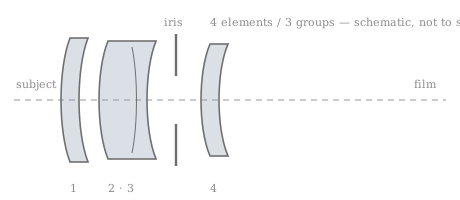
- Zeiss data sheet — C T* (cross-section, MTF)
- Zeiss data sheet — CF (cross-section, MTF)
- Zeiss data sheet — CFi (cross-section, MTF)
ⓘ What these charts mean
MTF (modulation transfer function) shows how much contrast the lens keeps at a given fineness of detail, from the center of the frame to the corner — the coarse curves track punch, the fine ones resolving power, and a gap between solid and dashed lines means astigmatism. Relative illumination (falloff) shows how much darker the corners are than the center at each aperture. Manufacturers only began publishing these for modern lenses; no 1950s maker issued them, which is why older families here cite period magazine bench tests instead.
History
The 250mm f/5.6 Sonnar was the long lens of the Hasselblad V system from the beginning, and it outlasted almost everything around it. Zeiss’s data sheet for the C T* version gives the design in full: four elements in three groups, an exact focal length of 248.4 mm, 930 g, a diagonal field of 18°, closest focus 2.5 m, an aperture scale running from f/5.6 to f/45, a Compur size 0 interchangeable reflex shutter with automatic iris diaphragm, and a bayonet for Hasselblad’s series 50 filters. The sheet’s claim for it is a modest one — “even at full aperture the image quality of this lens is excellent and cannot be improved any further by stopping down” — with portraiture, long-range, press, sports and stage photography listed as the intended work, and the narrow depth of field recommended as a way to separate a portrait subject from an unsteady background.
That four-in-three computation never changed. The CF sheet of 1982 and the CFi sheet of 1998 both repeat it, and both repeat the same exact focal length or something very near it; neither claims a floating element, an aspheric surface, special glass or apochromatic correction. What changed was everything around the glass. The chrome barrel of the first years gave way to black anodising toward the end of the 1960s, and the red T* appeared on the name ring at the start of the 1970s — the usual date across the Hasselblad line is 1973 — which leaves a short window in which a black C Sonnar carries no T* mark at all. Neither transition has a documented serial boundary in any source consulted here.
In 1982 the Synchro-Compur was replaced by Prontor’s CF shutter. That version, cat. no. 10 11 15, moved the filter mount from series 50 to series 60, put a rubber grip on the focusing ring, turned the EV interlock from a lever into a push-button, and added the green F setting that holds the leaf shutter open so a leaf-shutter lens can be used on a 2000- or 200-series body’s focal-plane shutter. It also put on 70 g, reaching 1000 g. The CFi of 1998, cat. no. 10 11 37, kept the weight and the optics and carried the family to the end of the V system in 2013.
The CFi sheet is the one oddity in the run. It gives the exact focal length as 243.4 mm against 248.4 mm on both earlier sheets, and it adds a paragraph the others do not have: the optical materials are chosen to make the lens “very unsusceptible to thermal fluctuations”, safe to use in radiant heat from summer sunshine, industrial furnaces, jet propulsion test beds and rocket launch sites. Since the element and group counts are identical, either the glass was quietly changed or one of the figures is a printing error, and no document consulted here settles which.
Reception has always been divided in a way the sheets do not anticipate. Learn Film Photography’s review of a C T* praises the sharpness and an almost complete absence of chromatic aberration wide open, and calls it light enough to travel with; Silver in the Dark’s V-system guide reports that many owners struggle to hold it steady against a top shutter speed of 1/500 and find it hard to keep sharp — one reason a C or CF example changes hands for around $100 to $300.
What remains open: the serial boundaries of the chrome-to-black and pre-T*-to-T* changes; whether the CFi’s 243.4 mm is a recomputation or a typographical slip; who at Zeiss Oberkochen computed the lens, whom no source consulted names; any list price at any date, none of which was found here; and every production figure, which would have to come from Nordin’s compendia.
This history is AI-written, from the sources listed at the foot of the page. Where the record is silent it says so rather than filling the gap — but no human wrote these sentences.
Example photos
Sample photo wanted — shot with a Sonnar 250mm f/5.6? We'd love to feature it (with credit).
Live listings
Asking price, USD: a median of $280 across 112 fixed-price listings on 2026-09-11 (middle half $220–$380). Tracked since 2026-09-06, 2 days: down 2% from $280.
By day
| Date | Median | Middle half | Listings |
|---|---|---|---|
| 2026-09-11 | $280 | $220–$380 | 112 |
| 2026-09-06 | $280 | $220–$390 | 114 |
Asking prices from the listings scanned, not sales; junk-flagged rows and auction lots excluded; other currencies are not converted.
- Zeiss Sonnar 250mm F5.6 Hasselblad
- Zeiss Sonnar 250mm F5.6 Hasselblad
- Zeiss Sonnar 250Mm F5.6 Hasselblad
- Zeiss Sonnar 250mm F5.6 Lens For Hasselblad
- Zeiss Sonnar 250Mm F5.6 Hasselblad
- Zeiss Sonnar 250Mm F5.6 Hasselblad
- 🎦 Hasselblad Carl Zeiss Sonnar C 250mm f/5.6 schwarz #6379364 JP
- [ EXC + 5] Hasselblad Carl Zeiss Objektiv Sonnar C 250mm F/5.6 Telefoto Mf Japan
- [ EXC+ 5] Hasselblad Carl Zeiss Sonnar C 250mm F/5.6 Téléphoto Mf Objectif Apan
- [ EXC + 5] Hasselblad Carl Zeiss Objektiv Sonnar 250mm F5.6 C Telefoto Mf Ab
- [ EXC+ 5] Hasselblad Carl Zeiss Sonnar 250mm F5.6 C Téléphoto Mf Objectif D
- [EXC+5] Hasselblad Carl Zeiss Sonnar 250mm F5.6 C Telephoto MF Lens From JAPAN
- 【Exc+5】 Hasselblad Carl Zeiss Sonnar C 250mm F/5.6 Teleobjektiv aus JAPAN
- [ EXC +5] Hasselblad Carl Zeiss Sonnar 250mm F5.6 C Telephoto Mf Lente From
- RAR!!【Top Neuwertig】Carl Zeiss Sonnar C 250mm f/5.6 für Hasselblad V aus...
- HASSELBLAD Sonnar C 250mm F5,6 cromato
- Hasselblad C Sonnar 5,6/250 Carl Zeiss Tele Lens Chrome 250mm f/5.6 Teleobjektiv
- Carl Zeiss Sonnar 5.6/250mm f. Hasselblad NOTTESTED
- Carl Zeiss Sonnar 5.6/250mm / f. Hasselblad
- Hasselblad Zeiss SONNAR C 5,6/250 T* schwarz Carl Zeiss Lens 250mm 5.6 black
Show 284 more listings
- Zeiss Sonnar 250mm f5.6 Telephoto Lens for Hasselblad 500C - 500C/M Cameras
- HASSELBLAD Carl Zeiss SONNAR 250 / 5.6 Chrome
- Hasselblad Carl Zeiss Sonnar f/5.6—250mm T*. Black version (1981)
- Klarglas [NEUWERTIG] Hasselblad Carl Zeiss Sonnar C 250mm F5.6 schwarzes Obje...
- [Top NEUWERTIG mit Etui] Hasselblad Carl Zeiss Sonnar T* C 250mm f/5.6 MF...
- ⏯[N NEUWERTIG +++] Hasselblad Carl Zeiss Sonnar T* CF 250mm f/5.6 Objektiv...
- Carl Zeiss Sonnar C 5,6/250 Chrom Objektiv - Hasselblad 250mm F/5.6 Lens
- [Top NEUWERTIG] Hasselblad Carl Zeiss Sonnar T* CF 250mm f/5.6 MF Objektiv au...
- HASSELBLAD Carl Zeiss SONNAR 250 / 5.6 Chrome
- Hasselblad Sonnar C 250mm f5.6 T* 20079 Zeiss Lens 99654 near mint
- HASSELBLAD Carl Zeiss SONNAR 250 / 5.6 Chrome
- Hasselblad Zeiss Sonnar 5.6/250mm guter Zustand
- Hasselblad Carl Zeiss Sonnar f/5.6—250mm T*. Black version (1970)
- " Mint " Hasselblad Carl Zeiss Sonnar C 250mm F/5.6 T Objectif Noir De Japon
- Obiettivo manuale Hasselblad Sonnar 250mm F5.6
- Hasselblad Sonnar C 5,6/250 Chrom Objektiv - 250mm F/5.6 Medium Format Lens
- Zoll Mint Hasselblad Carl Zeiss Objektiv Sonnar C 250mm F/5.6 T Black aus Japan
- [NEAR MINT in Box] Hasselblad Sonnar T* CF 250mm f/5.6 MF Objektiv aus Japan
- Hasselblad Carl Zeiss Sonnar CF 250mm f/5.6 T* Teleobjektiv mit KAPUZE Exc+5 ...
- [NEUWERTIG] Hasselblad Carl Zeiss Sonnar C 250mm f/5.6 schwarz Objektiv aus...
- Objectif Manuel Hasselblad Sonnar 250mm F5.6
- Manuelles Hasselblad Sonnar 250mm F5.6 Objektiv
- Hasselblad Manual Focus Sonnar 250mm F5.6 Lens
- Hasselblad Zeiss Sonnar C 250mm F5.6 Cromo
- Hasselblad Zeiss Sonnar 250mm F5.6 Cromo
- Obiettivo Hasselblad Sonnar Synchro Compur 250mm f5.6
- Carl Zeiss Sonnar 250mm f/5.6 Hasselblad V-System - Silber - C-Objektiv - Top
- Manuelles Hasselblad Sonnar 250mm F5.6 Objektiv
- Objectif Manuel Hasselblad Sonnar 250mm F5.6
- Hasselblad Zeiss Sonnar 250mm F5.6 Chrome
- Hasselblad Zeiss Sonnar 250Mm F5.6 Cromo Objektiv
- Objectif Hasselblad Sonnar Synchro Compur 250mm f5.6
- Hasselblad Zeiss Sonnar C 250Mm F5.6 Chrom
- Hasselblad Zeiss Sonnar C 250mm F5.6 Chrome
- Hasselblad Sonnar Synchro Compur 250Mm F5.6
- HASSELBLAD Carl Zeiss SONNAR 250 / 5.6 Chrome
- Hasselblad Zeiss Sonnar C 250mm F5.6 Chrome Lens
- Hasselblad Sonnar Synchro Compur 250mm f5.6 Lens
- Hasselblad Zeiss Sonnar 250mm F5.6 Chrome
- Carl Zeiss Sonnar 250mm F/5.6 T* Hasselblad V-Serie - werkstattgeprüft
- Hasselblad Zeiss Sonnar 5.6/250mm V System
- Carl Zeiss Sonnar 250mm f5.6 Lens for Hasselblad 500C - 500C/M Cameras
- Carl Zeiss Sonnar 250mm f5.6 Lens For Hasselblad 500C - 500C/M Cameras
- Hasselblad Carl Zeiss Sonnar C 250mm/5,6 T* | Frisch geserviced | Zustand: A-
- Hasselblad Carl Zeiss CF Sonnar T* 250mm f/5.6 "Near Mint" 0221 Teleobjektiv
- Hasselblad Zeiss Sonnar 250Mm F5.6 Cromo Objektiv
- Hasselblad Zeiss Sonnar C 250Mm F5.6 Chrom
- Hasselblad Sonnar Synchro Compur 250Mm F5.6
- Hasselblad Zeiss Sonnar C 250Mm F5.6 Chrome
- Hasselblad Zeiss Sonnar 250mm F5.6 Chrome
- Objectif Hasselblad Sonnar Synchro Compur 250Mm F5.6
- Hasselblad / Carl Zeiss Sonnar CF 5,6/250 T* - Sonnar T 250mm 1:5.6 Mittelformat
- Obiettivo Hasselblad Sonnar 250mm f5.6 - Bellissimo
- Obiettivo manuale Hasselblad 250mm f5.6 Sonnar Zeiss
- Hasselblad Carl Zeiss T* Sonnar CF 250mm F/5.6 Manual MF Objektiv Near Mint...
- Hasselblad Carl Zeiss Sonnar 5.6/250mm C lens
- Wie NEU+++ Scheint UNBENUTZT Hasselblad Zeiss Sonnar T* 250mm f5.6 Synchro Compur
- Hasselblad C Sonnar 5.6/250mm Silver
- Hasselblad Sonnar 250mm F5.6 Objektiv - Bellissimo
- Objectif Hasselblad Sonnar 250mm f5.6 - Belle
- Objectif Manuel Hasselblad 250mm f5.6 Sonnar Zeiss
- Manuelles Hasselblad 250mm f5.6 Sonnar Zeiss Objektiv
- Hasselblad Sonnar 250mm f/5.6 Lens - Beautiful
- Hasselblad Manual Focus 250mm f/5.6 Sonnar Zeiss Lens
- Hasselblad / Carl Zeiss Sonnar CF 5,6/250 T* Objektiv - Sonnar T 250mm 1:5.6
- Obiettivo manuale Zeiss Sonnar 250mm F5.6 3471409
- Hasselblad Zeiss Sonnar C 250mm F 5.6 Cromo In Campana in Plexiglass
- Hasselblad Sonnar 250mm F5.6 Objektiv - Bellissimo
- Manuelles Hasselblad 250mm f5.6 Sonnar Zeiss Objektiv
- Objectif Hasselblad Sonnar 250Mm F5.6 - Magnifique
- Objectif Manuel Hasselblad 250Mm F5.6 Sonnar Zeiss
- Hasselblad Sonnar C 250mm f5.6 Silver in Mint Condition Without Box
- Hasselblad Sonnar CF 5.6/250 T* + Top (243657)
- Objectif Manuel Zeiss Sonnar 250mm F5.6 3471409
- Manuelles Zeiss Sonnar Objektiv 250mm F5.6 3471409
- Hasselblad Zeiss Sonnar C 250mm F 5.6 Objektiv Chrom in Plexiglas
- Hasselblad Zeiss Sonnar C 250mm F 5.6 Chrome En Cloche En Plexiglass
- Manual Focus Zeiss Sonnar 250mm F5.6 3471409 Lens
- Hasselblad Zeiss Sonnar C 250mm F 5.6 Plexiglass Chrome In Bowl
- Carl Zeiss Sonnar 250mm F/5.6 Silber Hasselblad V-Serie - CLA 01/26 - Top Set!
- Hasselblad Sonnar CF 250mm F/5.6 T* - Carl Zeiss 5,6/250 T Sonnar
- Carl Zeiss / Hasselblad Sonnar CF 5,6/250 T* - Sonnar T 250mm 1:5.6 Mittelformat
- Manuelles Zeiss Sonnar Objektiv 250mm F5.6 3471409
- Hasselblad Zeiss Sonnar C 250mm F 5.6 Objektiv Chrom in Plexiglas
- Objectif Manuel Zeiss Sonnar 250mm F5.6 3471409
- Hasselblad Zeiss Sonnar C 250Mm F 5.6 Chrome Dans Une Cloche En Plexiglas
- Hasselblad Zeiss Sonnar 250mm f/5.6 CF
- Hasselblad C Sonnar 5,6/250 T* Carl Zeiss Tele Lens Black 250mm 5.6
- Hasselblad 20079 Obiettivo Zeiss Sonnar C 250mm f/5.6
- Hasselblad Sonnar CF 250mm F5.6 T*
- Obiettivo manuale Hasselblad Zeiss Sonnar 250mm F5.6 CF
- Hasselblad Sonnar 5.6/250 CF - Checked by Hasselblad FW - Guter Zustand! RAR
- Objectif Manuel Hasselblad Zeiss Sonnar 250Mm F5.6 CF
- Hasselblad Zeiss Sonnar 250mm Manual Focus Lens F5.6 CF
- Objectif Manuel Hasselblad Zeiss Sonnar 250Mm F5.6 CF
- Obiettivo manuale Hasselblad 250mm F5.6 T* CF Sonnar
- Objectif Manuel Hasselblad 250mm F5.6 T Cf Sonnar
- Manueller Objektiv Hasselblad 250mm F5.6 T* CF Sonnar
- Hasselblad Manual Focus 250mm F5.6 T* CF Sonnar Lens
- Manueller Objektiv Hasselblad 250mm F5.6 T* CF Sonnar
- Objectif Manuel Hasselblad 250mm F5.6 T Cf Sonnar
- Hasselblad Carl Zeiss CFi 250mm f/5.6 Japan Star - Wie Neu mit OVP
- Linhof Carl Zeiss Sonnar 250mm f5.6 Objektiv lens Sehr Selten !!!
- Hasselblad 500 C/M Silver mit Carl Zeiss Sonnar 250mm. f/5.6. Kamera 6x6.
- CARL ZEISS 250MM F5.6 SONNAR CFI FOR HASSELBLAD V SYSTEM 3020081 #5573
- Obiettivo manuale Zeiss Sonnar 250mm F5.6 per Linhof Technika
- Manuelles Objektiv Zeiss Sonnar 250Mm F5.6 Für Linhof Technika
- Objectif Manuel Zeiss Sonnar 250mm F5.6 pour Linhof Technika
- Manual Focus Zeiss Sonnar 250mm F5.6 Lens For Linhof Technika
- Manuelles Objektiv Zeiss Sonnar 250Mm F5.6 Für Linhof Technika
- Objectif Manuel Zeiss Sonnar 250Mm F5.6 Pour Linhof Technika
- Vtg Hasselblad Lens Case Hard Leather 12½"x5" 250mm f/5.6 Sonnar C MCM Sweden A+
- Hasselblad 250mm f/5.6 Sonnar C Lens for Hasselblad 500 Series V {Bayonet 50}
- Carl Zeiss - Sonnar - 250mm f/5.6 Chrome C Lens for Hasselblad - Haze
- 【Exc+5】 Hasselblad Carl Zeiss Sonnar C 250mm F/5.6 Telephoto Lens from JAPAN
- Carl Zeiss Sonnar 250mm f/5.6 Telephoto Lens w/ Syncro-Compur Shutter
- [Exc+5] Hasselblad Carl Zeiss Sonnar C 250mm f5.6 T* Lens From JAPAN
- Used Hasselblad Carl Zeiss Sonnar 250mm C f/5.6 Lens
- Hasselblad 250mm f5.6 Sonnar T* C Black lens
- Hasselblad 250mm f5.6 Sonnar T* C Black lens
- [EXC+5] Hasselblad Carl Zeiss Sonnar 250mm F5.6 C Telephoto MF Lens From JAPAN
- Hasselblad Carl Zeiss Sonnar C 250mm f/5.6 Telephoto Lens
- [NEAR MINT] Hasselblad Carl Zeiss Sonnar C 250mm f/5.6 Telephoto Lens From Japan
- Hasselblad Carl Zeiss Sonnar T* C 250mm f/5.6 MF Lens Black Japan *238 #9
- Hasselblad 250mm f5.6 Zeiss Sonnar CF T* Lens *Read notes #486
- Hasselblad Carl Zeiss Sonnar C 250mm F5.6 Lens * Fair*
- Vintage Hasselblad Carl Zeiss Sonnar 250mm F/5.6 Synchro Computer
- Original Hasselblad Carl Zeiss Sonnar C 250mm f5.6 Chrome Lens in Excellent Cond
- Hasselblad 250mm f5.6 Sonnar C Silver lens
- 🎦 Hasselblad Carl Zeiss Sonnar C 250mm F/5.6 Black #6379364 JP
- USED Hasselblad 250mm F5.6 Zeiss Sonnar Lens
- Hasselblad 250mm f5.6 Sonnar C Silver lens
- Hasselblad 250mm f5.6 Sonnar C Silver lens
- Hasselblad 250mm f5.6 Sonnar C Silver lens
- [Near Mint w/Cap] Hasselblad Carl Zeiss Sonnar T* CF 250mm f/5.6 Lens From JAPAN
- Hasselblad Carl Zeiss Sonnar 250mm F5.6 Telephot Lens For 1000F/1600F Ex+5!
- [Near Mint] Hasselblad Carl Zeiss Sonnar C 250mm f/5.6 Lens
- ZEISS Sonnar T 250mm f/5.6 Lens
- Carl Zeiss Sonnar 5.6/250mm f/5.6 250mm mount Hasselblad No.5053003 Black
- Japan Hasselblad Sonnar C 250mm f/5.6 Black Used Lens
- [N MINT w/ Case] Hasselblad Carl Zeiss Sonnar C 250mm f5.6 T* MF Lens From JAPAN
- Hasselblad Carl Zeiss Sonnar C 250mm F5.6 T* MF Lens Black Near Mint!
- RARE!!【Top Mint】Carl Zeiss Sonnar C 250mm f/5.6 for Hasselblad V From Japan#2626
- Carl Zeis Sonnar 250mm f5.6 Hasselblad Chrome C Lens (1-3)
- [Excellent+++++] Hasselblad Carl Zeiss Sonnar C 250mm f5.6 T* Lens From Japan
- Hasselblad Sonnar 250mm f5.6 C T* Lens
- Hasselblad 250mm f5.6 Zeiss Sonnar C Lens Chrome With Case, Covers
- VINTAGE HASSELBLAD CARL ZEISS SONNAR 250mm F/5.6 LENS WITH CASE. 1000F/1600F.
- [ MINT ] Hasselblad Carl Zeiss Sonnar C 250mm F5.6 Black lens From JAPAN
- Carl Zeiss Sonnar T* 250mm f/5.6 Lens From Japan/T42/2556575
- Carl Zeiss Sonnar 250mm f5.6 chrome Synchro Compur lens Hasselblad 500C 500 C/M
- Hasselblad Carl Zeiss Sonnar T* CF 250mm f5.6 Lens From JAPAN *Near Mint* #5130
- [ Top MINT w/ Case ] Hasselblad Carl Zeiss Sonnar T* C 250mm f/5.6 MF From JAPAN
- [ MINT ] Hasselblad Carl Zeiss Sonnar C 250mm F5.6 Black lens From JAPAN
- ⏯[N MINT +++] Hasselblad Carl Zeiss Sonnar T* CF 250mm f/5.6 Lens From JAPAN
- Hasselblad Carl Zeiss Sonnar T* CF 250mm f/5.6 Lens
- [Excellent] Hasselblad Carl Zeiss Sonnar 250mm f/5.6 T* Lens from Japan/AA28
- [Exc+5] Hasselblad Carl Zeiss Sonnar C 250mm F5.6 From JAPAN
- HASSELBLAD Carl Zeiss Sonnar C 250mm F5.6 Lens Chrome
- [MINT] Hasselblad Carl Zeiss Sonnar C 250mm f/5.6 T* Manual Focus Lens FromJAPAN
- Exc Hasselblad Carl Zeiss Sonnar 250mm F5.6 f/5.6 T* Lens w/Case from JP #3454
- [Top MINT] Hasselblad Carl Zeiss T* CF Sonnar 250mm f/5.6 MF From JAPAN
- [Top MINT] Hasselblad Carl Zeiss Sonnar T* CF 250mm f/5.6 MF Lens From Japan
- Clear Glass [MINT] Hasselblad Carl Zeiss Sonnar C 250mm F5.6 Black lens JAPAN
- ZEISS Hasselblad CarlZeiss Sonnar F5.6 250mm Lens [Near Mint] US STOCK
- Hasselblad Carl Zeiss Sonnar 250mm f/5.6 Camera Lens
- 250MM 250/5.6 ZEISS SONNAR T* CF FOR HASSELBLAD (LIGHT HAZE, DUST)/222879
- [Optical Mint] Hasselblad Carl Zeiss Sonnar T* CF 250mm f/5.6 MF Lens From Japan
- [No extra costs!] Hasselblad Carl Zeiss Sonnar T* CF 250mm f5.6 Lens JAPAN NMint
- [Near MINT] Hasselblad Carl Zeiss Sonnar C 250mm F5.6 black lens From JAPAN
- "MINT" Hasselblad Carl Zeiss Sonnar C 250mm f/5.6 T* Lens Black From JAPAN #743
- [MINT] Hasselblad Carl Zeiss Sonnar CF f/5.6 250mm lens T*From JAPAN
- Sonnar 5.6/250 CF Zeiss Hasselblad medium format camera lens f/5.6 f=250mm
- [MINT] Hasselblad Carl Zeiss Sonnar C 250mm f/5.6 Black Lens from Japan #H3535
- [NEAR MINT in Box] Hasselblad Sonnar T* CF 250mm f/5.6 MF Lens From Japan
- [MINT] Hasselblad Carl Zeiss Sonnar 250mm f/5.6 T* CF Lens From JAPAN
- [Exc+5] Hasselblad Carl Zeiss Sonnar T* CF 250mm f/5.6 Telephoto Lens From Japan
- [MINT] Hasselblad Carl Zeiss T* Sonnar 250mm F5.6 Chrome MF Lens From Japan
- HASSELBLAD Carl Zeiss SONNAR 250 / 5.6 Chrome
- Hasselblad Carl Zeiss Sonnar T* 250mm F/5.6 CF Lens #52816 E6
- [MINT] Hasselblad Carl Zeiss Sonnar T* CF 250mm f5.6 Lens From JAPAN
- Hasselblad Carl Zeiss Sonnar C 250mm f/5.6 T* Lens Black Tested
- Hasselblad 250MM F5.6 Zeiss Sonnar C T Lens Black 4E
- [MINT] Hasselblad Sonnar CF 250mm F5.6 From JAPAN
- Hasselblad Carl Zeiss Sonnar T* CF 250mm f/5.6 Lens [MINT] S/N7179883
- "NEAR MINT"hasselblad CF 250mm F/5.6 for 500CM 503CW etc #5503
- Hasselblad Carl Zeiss T* Sonnar CF 250mm F/5.6 Manual MF Lens Near Mint +5 #2602
- Hasselblad Carl Zeiss CF Sonnar T* 250mm f/5.6 "Near Mint" 0221 Telephoto Lens
- [MINT] Hasselblad Carl Zeiss Sonnar T* CF 250mm f/5.6 Lens From JAPAN
- Hasselblad Carl Zeiss Sonnar T* CF 250mm f/5.6 Lens [Excellent+++] From Japan
- HASSELBLAD Carl Zeiss SONNAR 250 / 5.6 Chrome
- [Top MINT] Hasselblad Carl Zeiss Sonnar T* CF 250mm f/5.6 Lens From JAPAN
- Carl Zeiss Sonnar 250mm f/5.6 Lens, Long Focal Length, Telephoto Effect Lens
- Ex Hasselblad Carl Zeiss Sonnar 250mm f/5.6 C T* Black Lens w/Cap
- Hasselblad Zeiss Sonnar 5.6/250mm V System
- Hasselblad Carl Zeiss Sonnar T CF 250mm f5.6 Lens 774683
- "Excellent++ in BOX"hasselblad CF 250mm F/5.6 for 500CM 503CW etc #4733
- Hasselblad Carl Zeiss Sonnar T* C 250mm f5.6 Black Lens Camera Lens #715
- Hasselblad 250mm f5.6 Zeiss Sonnar CF T* Lens
- Hasselblad Sonnar (C) 250mm F5.6 Silver -EXC- 3983
- Hasselblad 250mm f5.6, US Seller
- Hasselblad Carl Zeiss Sonnar T* CF 250mm f5.6 Lens (Hasselblad Medium Format Len
- Hasselblad Carl Zeiss Sonnar 5.6/250mm C lens
- Hasselblad C Sonnar 5.6/250mm Silver
- Carl Zeiss Sonnar 250mm f/5.6 Lens for Hasselblad Camera
- Mint HASSELBLAD Carl Zeiss Sonnar C 250mm F/5.6 T* MF Lens À++++
- Hasselblad 250mm F/5.6 Carl Zeiss Sonnar T* Star Chrome C Lens - Near Mint
- [EXC+5] Hasselblad Carl Zeiss Sonnar C 250mm f/5.6 Silver Synchro Compur Overhau
- [Unused in Box] Hasselblad Carl Zeiss T* Sonnar CF 250mm f5.6 MF Lens From JAPAN
- [Top MINT] Hasselblad Zeiss Sonnar T* 250mm F/5.6 CFi Lens From JAPAN
- [Mint] Hasselblad Carl Zeiss CFi Sonnar T* 250mm F5.6 from Japan
- HASSELBLAD Sonnar 250mm F5.6 T* CF Hasselblad 3054
- CARL ZEISS 250MM F5.6 SONNAR CF FOR HASSELBLAD V SYSTEM 3020080 #5805
- HASSELBLAD Carl Zeiss Sonnar F/5.6 250mm T* CFi MF Lens [Top Mint] US Stock
- CFi [Almost MINT] Hasselblad Carl Zeiss Sonnar T* 250mm F/5.6 Lens From JAPAN
- [EXC+++] Hasselblad Carl Zeiss CFi Sonnar T* 250mm F5.6 w/ Caps from Japan100760
- Mint- In Box Hasselblad Sonnar C 250mm f/5.6 T* Black 503CW 500C/M
- Lens cleaned. HASSELBLAD Sonnar CFi 250mm F5.6 lens. Hasselblad lens 6244.
- Lens cleaned HASSELBLAD Sonnar CFi 250mm F5.6 lens Hasselblad lens 6244
- Sale Linhof Sonnar 250mm f/5.6 4X5 w/ Lens Board
- Hasselblad 500C camera with Hasselblad Carl Zeiss Sonnar T* 250mm f/5.6 MF Lens
- CARL ZEISS 250MM F5.6 SONNAR CFI FOR HASSELBLAD V SYSTEM 3020081 #5573
- Linhof Carl Zeiss Sonnar 250/5.6 For Technika 4X5 Camera with lens board+caps
- HASSELBLAD Carl Zeiss Sonnar 250mm F5.6 V Mount Lens Untested For Parts Japan
- [NEAR MINT] Hasselblad Carl Zeiss Sonnar C 250mm f/5.6 Telephoto Lens From Japan
- Hasselblad Carl Zeiss Sonnar T* C 250mm f/5.6 MF Lens Black Japan *238 #9
- [Exc+5] Hasselblad Carl Zeiss Sonnar C 250mm f/5.6 Telephoto MF Lens APAN JAPAN
- 【Exc+5】 Hasselblad Carl Zeiss Sonnar C 250mm F/5.6 Telephoto Lens from JAPAN
- [EXC+5] Hasselblad Carl Zeiss Sonnar 250mm F5.6 C Telephoto MF Lens From JAPAN
- RARE!!【Top Mint】Carl Zeiss Sonnar C 250mm f/5.6 for Hasselblad V From...
- 🎦 Hasselblad Carl Zeiss Sonnar C 250mm F/5.6 Black #6379364 JP
- Hasselblad C f5.6 250mm Sonnar Lens Serviced . BY NEWTON ELLIS & CO .
- Hasselblad Carl Zeiss Sonnar C 250mm F/5.6 Objektiv gebraucht Zustand aus Japan
- Hasselblad Carl Zeiss Sonnar 250mm F5.6 Telephot Lens For 1000F/1600F Ex+5!
- Hasselblad Carl Zeiss Sonnar 250mm f/5.6 C Telephoto Lens
- Hasselblad Sonnar T* F5.6 250mm Lens
- Hasselblad Carl Zeiss Sonnar C 250mm F5.6 T* MF Lens Black Near Mint!
- Carl Zeiss Sonnar 250mm F/5.6 KAMERA OBJEKTIV für Hasselblad, mechanisch funktionstüchtig
- [Excellent+++++] Hasselblad Carl Zeiss Sonnar C 250mm f5.6 T* Lens From Japan
- HASSELBLAD Carl Zeiss SONNAR 250 / 5.6 Chrome
- Clear Glass [MINT] Hasselblad Carl Zeiss Sonnar C 250mm F5.6 Black lens JAPAN
- Hasselblad Carl Zeiss Sonnar T* CF 250mm f5.6 Lens From JAPAN *Near Mint* #5130
- ⏯[N MINT +++] Hasselblad Carl Zeiss Sonnar T* CF 250mm f/5.6 Lens From JAPAN
- [ Top MINT w/ Case ] Hasselblad Carl Zeiss Sonnar T* C 250mm f/5.6 MF From JAPAN
- [MINT] Hasselblad Carl Zeiss Sonnar C 250mm f/5.6 T* Manual Focus Lens FromJAPAN
- [Top MINT] Hasselblad Carl Zeiss Sonnar T* CF 250mm f/5.6 MF Lens From Japan
- ZEISS Hasselblad CarlZeiss Sonnar F5.6 250mm Lens [Near Mint] US STOCK
- HASSELBLAD Carl Zeiss SONNAR 250 / 5.6 Chrome
- Carl Zeiss Hasselblad 250mm F/5.6 Sonnar Lens - Good Condition
- Hasselblad Carl Zeiss Sonnar T* 250mm F/5.6 CF Lens #52816 E6
- [NEAR MINT in Box] Hasselblad Sonnar T* CF 250mm f/5.6 MF Lens From Japan
- "MINT" Hasselblad Carl Zeiss Sonnar C 250mm f/5.6 T Lens Black From JAPAN #743
- [MINT] Hasselblad Carl Zeiss Sonnar 250mm f/5.6 T* CF Lens From JAPAN
- [Optical Mint] Hasselblad Carl Zeiss Sonnar T* CF 250mm f/5.6 MF Lens From Japan
- [MINT] Hasselblad Carl Zeiss Sonnar C 250mm f/5.6 Black Lens from Japan #H3535
- HASSELBLAD Sonnar 250mm f5.6
- Hasselblad Carl Zeiss Sonnar C 250mm f/5.6 T* Lens Black Tested
- [MINT] Hasselblad Carl Zeiss Sonnar T* CF 250mm f/5.6 Lens From JAPAN
- Hasselblad Carl Zeiss CF Sonnar T* 250mm f/5.6 "Near Mint" 0221 Telephoto Lens
- Hasselblad Carl Zeiss Sonnar T* CF 250mm f/5.6 Lens [MINT] S/N7179883
- Hasselblad Zeiss Sonnar 5.6/250mm V System
- Hasselblad C f5.6 250mm Sonnar Objektiv Just Serviced (20079). Graded: EXC+ [#10041]
- Hasselblad Carl Zeiss T* Sonnar CF 250mm F/5.6 Manual MF Lens Near Mint +5 #2602
- Hasselblad Carl Zeiss Sonnar CF 250mm f/5.6 T*. Hasselblad 500CM / 503CW etc
- Hasselblad Carl Zeiss Sonnar T* CF 250mm f/5.6 - Mint in Box
- Hasselblad V 250mm f5.6 Sonnar Tele T* CF 60 Series Objektiv komplett getestet
- Hasselblad Sonnar CF 5.6/250 T* + Top (243657)
- Hasselblad Zeiss Sonnar CF 250mm f/5.6 T Objektiv V System Serviced 2023 Boxed*
- [Top MINT] Hasselblad Zeiss Sonnar T* 250mm F/5.6 CFi Lens From JAPAN
- Hasselblad 250mm F5.6 CF Carl Zeiss Sonnar T* Lens
- CFi [Almost MINT] Hasselblad Carl Zeiss Sonnar T* 250mm F/5.6 Lens From JAPAN
- Hasselblad CF 250mm f/5.6 Sonnar T* Lens
- [EXC+5] Hasselblad Carl Zeiss Sonnar 250mm F5.6 C Telephoto MF Lens From JAPAN
- [Exc+5] Hasselblad Carl Zeiss Sonnar C 250mm f/5.6 Telephoto MF Lens APAN JAPAN
- Hasselblad 250mm f5.6 Sonnar
- "MINT" Hasselblad Carl Zeiss Sonnar C 250mm f/5.6 T Lens Black From JAPAN #743
- Hasselblad Carl Zeiss Sonnar CF 250mm f/5.6 Lens, V Series F4.5, w/ Case
- Hasselblad 250mm f5.6 Zeiss Sonnar Chrome
- Hasselblad 250mm f5.6 Zeiss Sonnar Black
- Hasselblad 250mm f5.6 Zeiss Sonnar CF
- [Very Good] Hasselblad Carl Zeiss Sonnar C 250mm f/5.6
- NEAR MINT Hasselblad Carl Zeiss Sonar CF 250mm F/5.6 T* Lens
- Hasselblad Carl Zeiss T* Sonnar 250mm F5.6 [V]
- Hasselblad 250mm f/5.6 Sonnar. Lens for the Hasselblad 500 Series V
eBay links are affiliate links. If you buy through one, Glass Bodies earns a small commission from eBay at no cost to you. It does not change which listings appear, their prices or their order — those come from the search and the sort described above.
Listings updated 2026-09-11. Links go to the shop or marketplace that carries the item.