Nikkor 55mm f/1.2
Nippon Kogaku · Nikon F · 1965 · Double Gauss, seven elements in five groups
our own findingAlso known as: Nikkor-S Auto 55mm f/1.2 · Nikkor-S.C Auto 55mm f/1.2 · Nikkor-S·C Auto 55mm f/1.2 · New Nikkor 55mm f/1.2 · Ai Nikkor 55mm f/1.2 · Nippon Kogaku Nikkor-S 55mm f1.2 · ニッコール 55mm F1.2
Variants & identification
| Variant | Mount | Years | Serial ranges | Production |
|---|---|---|---|---|
| Prototype | Nikon F | — | 970101–970110 | 3 recorded by Vink; van Dijk has never seen one on the market |
| Nikkor-S Auto 55mm f/1.2 (first version) | Nikon F | 1965–1967 | 970111–985390 | ~15,300¹ |
| Nikkor-S Auto 55mm f/1.2 (second version) | Nikon F | 1967–1971 | 184711–215730 | ~31,000¹ |
| Nikkor-S Auto 55mm f/1.2 (Nikon name ring) | Nikon F | 1971–1972 | 220001–240561 | ~20,600¹ |
| Nikkor-S·C Auto 55mm f/1.2 | Nikon F | 1972–1974 | 250001–300556 | ~50,600¹ |
| New-Nikkor 55mm f/1.2 (K) | Nikon F | 1974–1977 | 350011–385739 | ~35,700¹ |
| Ai Nikkor 55mm f/1.2 | Nikon F | 1977–1978 | 400001–425518 | ~25,500¹ |
| NASA versions | Nikon F | — | 8000111–8000116 800001/1001–800018/1018 | Vink records about 116 in the 8000xxx block and 18 in the 1001-series; van Dijk says 18 lenses were converted |
- Quantities are Roland Vink's per-block figures, from collected serial numbers rather than factory records.
- Two independent estimates of total production nearly agree. Nico van Dijk, counting version by version, arrives at "somewhere around 175,600 lenses" over twelve and a half years, at a monthly rate rising from about 800 to about 1,800. Summing Vink's per-block quantities gives about 178,700. Neither is a factory number.
- The date of the New-Nikkor is unsettled by a year and a half. Nikon's own history says the design was modified to use a new nitrate material and the New-Nikkor 55mm f/1.2 was put on the market in 1975. Vink's serial table starts the K block in November 1974. Van Dijk says the version "came into production in April 1976." All three describe the same barrel and the same serial block beginning at 350001/350011.
- Van Dijk gives the total number of changes to the optical formula as two, at serials 220001 and 350011, and describes both as minor. No source consulted here publishes the two prescriptions, so how minor is not independently checkable — the element and group counts, the filter size and the aperture range are identical across all of them.
- The Nikkor-O 55mm f/1.2 is a different lens with the same numbers on it: eight elements in six groups, thirteen aperture blades, a Leica thread mount and a fixed focus, built in the 1970s for photographing cathode-ray-tube screens. It is not a variant of this family.
How to tell them apart
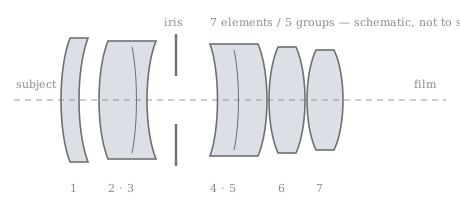
- Seven elements in five groups from 1965 to 1978 — the layout never changed, only the glass, twice
- 52 mm filter thread on a 73.5 mm barrel: the front ring is far wider than the thread it carries
- The rear element is cut flat on one side to clear the aperture lever, which is what produces the cat's-eye highlights at full aperture
Prototype:
- About a 60–62 mm filter ring, not 52 mm
- Triangular meter prong and a ribbed aperture ring
Nikkor-S Auto 55mm f/1.2 (first version):
- Six-digit serial preceded by No.
- Scalloped focus and aperture rings with a 5 mm chrome band between them
- The first 2,000 or so have no groove in the aperture ring, and thirteen ribs rather than eleven
- Aperture ring screwed on, not lifted off — this version cannot take a later Ai ring
Nikkor-S Auto 55mm f/1.2 (second version):
- Serial block restarts, incomprehensibly, at 184711
- Aperture ring lifts off after releasing a side screw, so an Ai ring can be fitted
- Smaller lettering than the first version; five back-plate screws from about serial 193000
- 215731 is the last lens recorded reading Nippon Kogaku Japan
Nikkor-S Auto 55mm f/1.2 (Nikon name ring):
- Name ring reads Nikon; the No. before the serial number disappears
- Rear elements multi-coated ahead of the fully coated S·C
- Round meter prong
Nikkor-S·C Auto 55mm f/1.2:
- S·C on the name ring, amber coating in reflection, 6 mm chrome band
- Slot screws to serial 260000, cross-head screws after
New-Nikkor 55mm f/1.2 (K):
- Flat black barrel with a rubber focusing grip; the scalloped rings are gone
- Focuses to 0.5 m rather than 0.6 m
- 72 mm across rather than 73.5 mm; 61 mm long; about 410–415 g
Ai Nikkor 55mm f/1.2:
- Double row of aperture figures for direct readout
- Asymmetric meter prong to about serial 413400
- Last batch reads MADE IN JAPAN in black rather than lens made in Japan in white, and adds a rear flange protector
NASA versions:
- Oversize focus scale in feet only
- Finely knurled focus ring; black inscription around the front element, nearly invisible
- Prototype: Known chiefly from a photograph in Joseph D. Cooper's Nikon F Nikkormat handbook of 1962. Van Dijk notes that no lens in this serial range has surfaced in a shop, a collection or the JCII museum, so its specification is inferred rather than measured.
- Nikkor-S Auto 55mm f/1.2 (first version): Serial numbering starts at 970111, which van Dijk points out makes the earliest lens on the market the tenth built. Nikon has never explained the 970xxx block.
- Nikkor-S Auto 55mm f/1.2 (second version): No lenses have been found between about 216000 and 219999, which van Dijk reads as evidence that the block was closed when the formula was altered.
- Nikkor-S Auto 55mm f/1.2 (Nikon name ring): Van Dijk records the first of two small alterations to the optical formula at this serial, and warns that many spare name rings numbered in the 230000s were sold to repairers, so a number in that range does not date a lens reliably.
- Nikkor-S·C Auto 55mm f/1.2: Nikon states this was its first lens with multi-layer coating on every glass-to-air surface; the 35mm f/1.4 and 28mm f/2 followed in the same year.
- New-Nikkor 55mm f/1.2 (K): New glass rather than a new layout. Nikon says the design was modified to use a new nitrate material, which bought the shorter focusing distance; the element and group counts do not change. Some were supplied to order with an Ai aperture ring before Ai existed as a system.
- Ai Nikkor 55mm f/1.2: Thirteen months of production. There is no Ai-S 55mm f/1.2 — Ai-S arrived in 1981, three years after this lens was withdrawn.
- NASA versions: The two figures are not obviously the same set of lenses and no source consulted here reconciles them. Van Dijk adds that some may have been left on the moon, which is a claim about NASA hardware generally rather than about this lens specifically.
Serial-range notes
- 970111–985390
- First marketed block. Aperture ring is screwed on and cannot be exchanged for an Ai ring; owners who wanted one on an Ai body milled the original.
- 216000–219999
- Empty. No lens has been recorded in this range, and the optical formula was altered at 220001.
- 220001
- First of two small changes to the formula; name ring changes from Nippon Kogaku Japan to Nikon; rear elements multi-coated.
- 230000–240000
- Spare name rings numbered in this range were distributed to repairers. A serial here is weaker evidence of date than elsewhere.
- 350011
- Second and last change to the formula, with the new glass of the New-Nikkor. Close focus shortens to 0.5 m.
Specifications
- Formula
- Double Gauss, seven elements in five groups
- Designed by
- Shimizu Yoshiyuki (清水義之) — optical design
- Construction
- 7 elements / 5 groups
- Aperture range
- f/1.2–f/16
- Diaphragm blades
- 7
- Min. focus
- 0.6 m
- Weight
- 425 g
- Filter
- 52 mm (0.75 mm pitch)
- Years manufactured
- 1965–1978
- Country
- Japan
- Coating
- Single layer to 1972; multi-layer from the S·C of October 1972
What reviewers say
- BastianK (phillipreeve.net) (blog) — Soft and glowing at f/1.2 from undercorrected spherical aberration, with coma a real problem — massive artifacts from f/1.2 to f/2 and f/5.6 needed for clean corners — but flare resistance better than expected, and a lens he recommends only to someone looking for something different rather than something correct.
- Richard Haw (blog) — An ambitious design that is perfectly usable wide open and gives two distinct looks depending on aperture, at its best where it was meant to be used — in low light.
Optical formula — Double Gauss, seven elements in five groups
History
The five millimetres in this lens’s name are the whole story. A Double Gauss will go to f/1.2 readily enough; what it will not do is go to f/1.2 at 50mm and still leave room for an SLR mirror to swing. Nikon’s own account is candid about the sequence: rangefinder designers had already built f/1.4 and f/1.1 lenses, the reflex camera took that away from them, other makers stretched even their f/2 lenses to 55mm to get the back focus, and Nikon stretched to 5.8cm for its first fast fifty. Shimizu Yoshiyuki, whose working life was normal lenses, settled on 55mm for f/1.2 and took the speed.
The design was finished in the summer of 1964, prototyped that winter, drawn for mass production in late spring 1965, and on sale in December — seven elements in five groups, 420 grams, a 73.5 mm barrel carrying an ordinary 52 mm filter thread. Nikon’s competitors took longer. Canon reached f/1.2 at 58mm in 1962 and at 55mm in 1968, and did not get to 50mm until 1980.
Across thirteen years the layout never changed. The glass did, twice, at serial 220001 and again at 350011, and van Dijk calls both alterations minor; the second came with the new nitrate glass of the New-Nikkor and bought a shorter focusing distance, 0.6 m to 0.5 m. Everything else that happened to the lens happened to its barrel: scalloped rings to 1974, a rubber grip after, multi-coating in October 1972, and an Ai aperture ring in the spring of 1977. There is no Ai-S version, because Ai-S arrived in 1981 and the lens was gone in April 1978, ended by the Ai Nikkor 50mm f/1.2 that finally did what Shimizu had been unable to do in 1964.
Whether it is a good lens depends entirely on the aperture it is judged at, and the honest answer at f/1.2 is that it is a fast lens rather than a corrected one. Coma is the dominant fault — massive artifacts from f/1.2 through f/2 in one careful test, with f/5.6 needed for clean corners — and spherical aberration is undercorrected, so point sources glow. Vignetting runs about 2.7 EV wide open, and the rear element is cut flat on one side to clear the aperture lever, which is why out-of-focus highlights at the edges are shaped like cat’s eyes. Flare resistance, the thing most often assumed to be terrible on a lens of this age and speed, is better than expected.
Two numbers here are unusually well corroborated and one is not. The production total is agreed to within two per cent by two independent counts — van Dijk’s version-by-version tally of about 175,600 and the sum of Vink’s serial blocks at about 178,700 — which is as close to a settled figure as this family gets. The NASA versions are not settled at all: Vink lists roughly 116 lenses in an 8000xxx block and eighteen in a separate 1001-series, van Dijk says eighteen were converted, and nothing consulted here explains whether those are two counts of one thing or descriptions of two.
This history is AI-written, from the sources listed at the foot of the page. Where the record is silent it says so rather than filling the gap — but no human wrote these sentences.
Example photos

Sample photo wanted — shot with a Nikkor 55mm f/1.2? We'd love to feature it (with credit).
Live listings
Asking price, USD: a median of $210 across 48 fixed-price listings on 2026-09-11 (middle half $180–$250). Tracked since 2026-09-06, 2 days: unchanged from $210.
By day
| Date | Median | Middle half | Listings |
|---|---|---|---|
| 2026-09-11 | $210 | $180–$250 | 48 |
| 2026-09-06 | $210 | $180–$250 | 48 |
Asking prices from the listings scanned, not sales; junk-flagged rows and auction lots excluded; other currencies are not converted.
- [Near MINT] Nikon new Nikkor 55mm F/1.2 F1.2 MF Standard Prime Lens From JAPAN
- Nikon NIKKOR-S.C Auto 55mm f/1.2 Non-AI Prime Lens [Almost MINT]From JAPAN #552
- [Near Mint] Nikon Non-Ai Nikkor S.C Auto 55mm f/1.2 MF Lens from Japan #8139
- [Exc+3] Nikon NIKKOR 55mm f/1.2 Non-AI MF Standard Prime Lens from Japan
- [Near MINT] Nikon Nikkor-S.C Auto 55mm f/1.2 non Ai MF Lens From JAPAN
- [Almost MINT] NIKON Non-AI NIKKOR-S.C Auto 55mm F1.2 MF Standard Lens From JAPAN
- TOP Nikon Non Ai Nikkor-S Auto 55mm F/1.2 Prime Objektiv
- VERY GOOD 【Serviced】 Nikon Non Ai Nikkor-S Auto 55mm F/1.2 Prime Lens
- [Exc+5] Nikon New Nikkor 55mm f/1.2 non Ai MF Lens F Mount From JAPAN
- Near Mint Nikon Nikkor S.C SC Auto Non Ai 55mm f/1.2 Standard Prime Lens #0431
- TOP Nikon Non Ai Nikkor-S Auto 55mm F/1.2 Prime Objektiv
- EXCELLENT Nikon Non Ai NIKKOR 55mm F/1.2 Prime Lens
- EXCELLENT Nikon Non Ai NIKKOR 55mm F/1.2 Prime Lens
- EXCELLENT Nikon Non Ai Nikkor-S Auto 55mm F/1.2 Prime Lens
- EXCELLENT Nikon Non Ai Nikkor-S Auto 55mm F/1.2 Prime Lens
- Nikon NIKKOR-S.C Auto 55mm f/1.2 Non Ai Lens
- [Mint] Nikon NIKKOR-S.C 55mm f1.2 Non Ai MF Lens From JAPAN #2882626
- Nikon Nikkor-S Auto 55mm f/1.2 Non-Ai Prime Lens Nikon F Mount Japan [MINT]
- [Almost MINT++] Nikon NIKKOR-S.C Auto 55mm f/1.2 Non-AI Prime Lens From...
- [Near MINT+++] Nikon Nikkor S.C Auto 55mm f/1.2 Ai Converted Prime MF Lens JAPAN
Show 156 more listings
- TOP Nikon Non Ai Nikkor-S Auto 55mm F/1.2 Prime Objektiv
- EXCELLENT Nikon Non Ai Nikkor-S.C Auto 55mm F/1.2 Prime Lens
- EXCELLENT Nikon Non Ai Nikkor-S.C Auto 55mm F/1.2 Prime Lens
- EXCELLENT Nikon Non Ai Nikkor-S.C Auto 55mm F/1.2 Prime Lens
- EXCELLENT Nikon Non Ai Nikkor-S Auto 55mm F/1.2 Prime Lens
- EXCELLENT Nikon Non Ai NIKKOR 55mm F/1.2 Prime Lens
- EXCELLENT Nikon Non Ai Nikkor-S.C Auto 55mm F/1.2 Prime Lens
- [Almost MINT] Nikon Nikkor-S.C Auto 55mm f/1.2 non Ai MF Prime Lens From JAPAN
- [Near MINT] Nikon Nikkor-S.C Auto 55mm f/1.2 Pre-Ai Prime Bokeh Lens JAPAN
- VERY GOOD Nikon Non Ai Nikkor-S.C Auto 55mm F/1.2 Prime Lens
- [Near MINT] Nikon Nikkor-S.C Auto Non Ai 55mm F1.2 MF Lens From JAPAN
- NIkon NIKKOR-S.C Auto 55mm f/1.2 Non-Ai "Near Mint" 5385 Portrait Lens
- NIkon NIKKOR-S.C Auto 55mm f/1.2 Non-Ai "Near Mint" 2092 Portrait Lens Japan
- [ Near MINT ] Nikon Nikkor Ai 55mm f/ 1.2 MF Standard Prime Lens From JAPAN
- [US Duty Paid] Nikon Nikkor-S.C Auto 55mm f1.2 Non-Ai MF Lens JAPAN #L73
- [Top MINT]Nikon Non Ai Nikkor-S Auto 55mm f1.2 Prime Lens Tested From JP 2943830
- [Top MINT] Nikon Nikkor-S.C Auto 55mm f/1.2 non Ai MF Lens From JAPAN 1409
- [Top MINT] Nikon Nikkor-S Auto 55mm f/1.2 non Ai MF Lens From JAPAN 1402
- [Near Mint] Nikon Non-AI Nikkor-S Auto 55mm f/1.2 Fast MF Lens Nikon F Japan
- EXCELLENT Nikon Ai Nikkor 55mm F/1.2 Prime Lens
- EXCELLENT Nikon Ai Nikkor 55mm F/1.2 Prime Lens
- w/Case [MINT] Nikon NIKKOR-S.C Auto 55mm f/1.2 Non Ai Prime Lens From JAPAN
- 🎬[MINT] NIKON New Nikkor 55mm f1.2 non Ai Prime MF Lens F mount From JAPAN...
- [Top MINT] Nikon Nikkor-S.C Auto 55mm f1.2 Ai Converted MF Prime Lens From JAPAN
- [Top MINT++] Nikon Nikkor-S.C Auto 55mm F1.2 Non Ai MF Lens From JAPAN
- Vintage Nikon F Nikkor Auto 55mm f1.2 AI Manual Focus, Excellent Condition.
- Nikon Nikkor 55mm f1.2 non AI Manual Lens - Nikon DF, Sony A7
- Nikon 55mm F/1.2 Auto Nikkor-S Pre-AI Standard Manual Focus Lens
- Nikon 55mm F/1.2 Auto NIKKOR-S.C Pre-AI Standard Manual Focus Lens
- Nikon Nikkor S Auto 55mm f1.2 PRE-AI Manual Focus lens Mint- Tested see images
- Nikon Nikkor-S.C Auto 55mm F/1.2 Pre-Ai Lens + EF Mount
- Nikon Nikkor-S Auto 55mm f1.2 (Pre-AI)
- Nikon Nikkor 55mm F1.2 S C Factory AI Manual Focus Standard Lens Poor Optics
- [Near Mint] Nikon Non-Ai Nikkor-S Auto 55mm f/1.2 MF Prime Lens from Japan #8216
- [Exc+5] Nikon Nikkor-S Auto Non Ai 55mm f/1.2 MF Standard Lens For F Mount JAPAN
- [Near MINT] Nikon New Nikkor 55mm f/1.2 non Ai MF Lens From JAPAN
- [Exc+5] Nikon New Nikkor 55mm f/1.2 non Ai MF Lens F Mount From JAPAN
- [Near Mint] Nikon Non-Ai Nikkor S.C Auto 55mm f/1.2 MF Lens from Japan #8139
- [Mint] Nikon NIKKOR-S.C 55mm f1.2 Non Ai MF Lens From JAPAN #2882626
- [Near MINT] Nikon New Nikkor 55mm f/1.2 non Ai MF Lens No Prong From JAPAN
- Nikon Nikkor AI 55mm f1.2 Lens, *Read Notes #701
- [APP TOP MINT] Nikon Non Ai Nikkor S C 55mm f/1.2 Standard MF Lens from JAPAN
- Nikon NIKKOR-S.C Auto 55mm f/1.2 Non-AI Prime Lens [Almost MINT]From JAPAN #552
- [Almost MINT] NIKON Non-AI NIKKOR-S.C Auto 55mm F1.2 MF Standard Lens From JAPAN
- "Mint" Nikon Auto Nikkor S.C 55mm F/1.2 Non Ai MF Prime Lens From Japan #2514 00
- NIKKOR-S Auto 55mm f/1.2, serial 193343 good condition legacy lens
- [Near MINT] Nikon Nikkor-S.C Auto 55mm f/1.2 non Ai MF Lens From JAPAN
- [Almost MINT++] Nikon NIKKOR-S.C Auto 55mm f/1.2 Non-AI Prime Lens From JAPAN
- [ Near MINT ] Nikon New Nikkor 55mm f/1.2 non Ai MF Prime Lens F Lens From JAPAN
- Nikon Nikkor-S Auto 55mm F/1.2 Non Ai MF "Excellent+++" From Japan
- [Exc+3] Nikon NIKKOR 55mm f/1.2 Non-AI MF Standard Prime Lens from Japan
- Nikon Nikkor-S 55mm f1.2
- [Near MINT] Nikon Nikkor-S.C Auto 55mm f/1.2 Pre-Ai Prime Bokeh Lens JAPAN
- [Near MINT+++] Nikon Nikkor S.C Auto 55mm f/1.2 Ai Converted Prime MF Lens JAPAN
- [MINT w/Case] Nikon Nikkor S.C Auto 55mm f/1.2 non Ai MF Lens From JAPAN
- [Top MINT] Nikon NIKKOR-S.C Auto 55mm F1.2 MF Non Ai F Mount Lens From JAPAN
- [ Near MINT+++ ] Nikon New Nikkor 55mm f/1.2 Ai MF Prime Lens From JAPAN
- [MINT] Nippon Kogaku NIKKOR-S Auto 55mm f/1.2 Non Ai MF Prime Lens From JAPAN
- [MINT] Nikon New Nikkor Non-Ai 55mm f/1.2 Standard MF Lens From JAPAN
- VERY GOOD Overhauled Nikon Non Ai Nikkor-S Auto 55mm F/1.2 Prime Lens
- Nikon NIKKOR-S.C Auto 55mm f/1.2 Non Ai Lens
- [Top MINT] Nikon Nikkor-S Auto 55mm f/1.2 non Ai MF Prime Lens Tested From JAPAN
- [ Near MINT ] Nikon Nikkor Ai 55mm f/ 1.2 MF Standard Prime Lens From JAPAN
- [Near MINT] Nikon Nikkor-S.C Auto Non Ai 55mm F1.2 MF Lens From JAPAN
- [Near Mint] Nikon Non-AI Nikkor-S Auto 55mm f/1.2 Fast MF Lens Nikon F Japan
- [MINT] Nikon Ai Nikkor 55mm F/1.2 F1.2 MF Standard Prime Lens From JAPAN
- [Top MINT]Nikon Non Ai Nikkor-S Auto 55mm f1.2 Prime Lens Tested From JP 2943830
- CLA'd [MINT] Nikon New Nikkor Non Ai 55mm f1.2 MF Standard Lens from japan
- [US Duty Paid] Nikon Nikkor-S.C Auto 55mm f1.2 Non-Ai MF Lens JAPAN #L73
- Nikon 55mm F/1.2 Non Ai Nikkor S L#977950
- Nikon NIKKOR-S.C Auto 55mm f/1.2 Non-Ai MF Prime [Near MINT] Lens From Japan
- [MINT] Nikon Ai Nikkor 55mm F1.2 F/1.2 MF Standard Prime Lens From JAPAN
- EXCELLENT Nikon Non Ai Nikkor-S Auto 55mm F/1.2 Prime Lens
- [Top MINT++] Nikon Nikkor-S.C Auto 55mm F1.2 Non Ai MF Lens From JAPAN
- Near MINT Nikon Nikkor Ai 55mm f/ 1.2 MF Standard Prime Manual Lens From Japan
- CLA'd [EXC+5] Nikon Nikkor-S.C Auto 55mm F1.2 Non Ai MF Lens From JAPAN
- ▶️Tested[MINT] Nikon Nikkor-S Auto 55mm f1.2 Converted Ai MF Prime Lens JAPAN
- [Top MINT] Nikon Nikkor-S.C Auto 55mm f1.2 Ai Converted MF Prime Lens From JAPAN
- Nikon nikkor 55mm F1.2 MF non ai Lens K
- Nikon Ai Nikkor 55mm f/1.2 Standard Prime Lens No Fungus No Haze Near Mint Japan
- Très Bon Objectif Nikon Non Ai Nikkor-S.C Auto 55Mm F/1.2 Prime
- [Fast NEUWERTIG] NIKON Non-AI NIKKOR-S.C Auto 55mm F1.2 MF Standardobjektiv...
- EXCELLENT Objectif Nikon Non Ai Nikkor-S Auto 55Mm F/1.2 Prime
- [NEUWERTIG] Nikon Nikkor-S Auto 55mm f/1.2 non Ai MF Objektiv aus JAPAN
- Nikon Nikkor-S.C SC Auto 55mm f/1.2 Non Ai MF Standardobjektiv [Exc+5]
- EXCELLENT Objectif Prime Non Ai NIKKOR Nikon 55mm f/1.2 Monture Nikon F
- EXCELLENT Objectif Nikon Non Ai Nikkor-S Auto 55Mm F/1.2 Prime
- EXCELLENT Objectif Nikon Non Ai Nikkor-S Auto 55Mm F/1.2 Prime
- EXCELLENT Objectif Nikon Non Ai Nikkor-S Auto 55Mm F/1.2 Prime
- Video*[NEUWERTIG] Nikon Nikkor-S Auto 55mm f/1.2 MF Standardobjektiv Non AI...
- EXCELLENT Objectif Prime Non Ai NIKKOR Nikon 55mm f/1.2 Monture Nikon F
- EXCELLENT Objectif Nikon Non Ai Nikkor-S Auto 55Mm F/1.2 Prime
- EXCELLENT Objectif Nikon Non Ai Nikkor-S Auto 55Mm F/1.2 Prime
- EXCELLENT Objectif Nikon Non Ai Nikkor-S.C Auto 55mm F/1.2 Prime
- EXCELLENT Objectif Nikon Non Ai Nikkor-S.C Auto 55mm F/1.2 Prime
- [Fast NEUWERTIG] Nikon Nikkor-S.C Auto 55mm f/1.2 non Ai MF Prime Objektiv...
- [Near MINT] Nikon New Nikkor 55mm f/1.2 non Ai MF Prime Lens F Lens F F F F F...
- EXCELLENT Objectif Nikon Non Ai Nikkor-S.C Auto 55mm F/1.2 Prime
- EXCELLENT Objectif Nikon Non Ai Nikkor-S.C Auto 55mm F/1.2 Prime
- Objectif Nikon NIKKOR-S 55mm f/1.2 Non Ai Nikkor-S Auto Manuel 35mm SLR
- [NEUWERTIG] NIKON Non-AI NIKKOR S.C S C Auto 55mm F1.2 MF Standardobjektiv...
- NIkon NIKKOR-S.C Auto 55mm f/1.2 Non-Ai "Near Mint" 2092 Portrait Lens Japan
- NIkon NIKKOR-S.C Auto 55mm f/1.2 Non-Ai "Near Mint" 5385 Portrait Objektiv
- [US Duty Paid] Nikon Nikkor-S.C Auto 55mm f1.2 Non-Ai MF Objektiv JAPAN #L73
- [OPT Near Mint] Nikon Nikkor-S Auto 55mm f/1.2 non Ai MF Objektiv aus JAPAN
- [NEUWERTIG] Nikon Non-Ai neues NIKKOR 55mm f/1.2 MF Objektiv F Mount...
- [Top NEUWERTIG] Nikon Nikkor-S.C Auto 55mm f1.2 Non Ai MF Standardobjektiv au...
- [MINT] Nikon Nikkor-S Standard 55mm f/1.2 Non-Ai MF Nikon F Bajonett Objektiv
- [NEUWERTIG/mit Haube] Nikon Nikkor-S Auto 55mm f/1.2 Non-AI Fast MF Lens...
- CLA'd [MINT] Nikon New Nikkor Non Ai 55mm f1.2 MF Standard Lens from japan
- Nikon Nikkor S.C Auto 55mm f/1.2 Non Ai Objektiv F Mount [NEUWERTIG+] aus...
- [Near Mint] Nikon Non-AI Nikkor-S Auto 55mm f/1.2 Fast MF Lens Nikon F Japan
- Excellente Lentille Prime Nikon Ai Nikkor 55Mm F/1.2
- Excellente Lentille Prime Nikon Ai Nikkor 55Mm F/1.2
- [NEUWERTIG] Nikon Nikkor-S.C Auto 55mm f/1.2 non Ai MF Objektiv aus JAPAN
- [NEUWERTIG] Nikon Non Ai Nikkor-S Auto 55mm f1.2 Prime Objektiv getestet...
- [Near Mint+] Nikon Non AI Nikkor-S.C Auto 55mm f1.2 MF Ultra Fast Prime Japan
- ⏯️[ N NEUWERTIG / Haube ] Nikon Nikkor S.C Auto 55mm f/1.2 Ai konvertiertes O...
- 🎬[NEUWERTIG] NIKON New Nikkor 55mm f1.2 non Ai Prime MF Lens F mount F...
- Nikon New NIKKOR 55mm f/1.2 MF Standard Prime Lens #219 Non-AI N/Mint from Japan
- ⏯️ [NEUWERTIG] Nikon Nikkor-S.C Auto 55mm f/1.2 Ai Converted MF Objektiv F Mo...
- Selten!!![Top NEUWERTIG] Nikon Nikkor-S 55mm f/1.2 Non-Ai 35mm MF Prime...
- Ai Converted [Top NEUWERTIG] Nikon NIKKOR S.C Auto 55mm f/1.2 Standard MF...
- Nikon Nippon Kogaku Nikkor-S 55mm F 1.2, non-AI, MF, Nikon F
- [NEUWERTIG] Nikon NIKKOR-S Auto 55mm f/1.2 AI Converted MF Objektiv aus Japan
- EXCELLENT Serviced Nikon Non Ai Nikkor-S.C Auto 55mm f/1.2 Festbrennweite Linse
- Objectif Nikon Nikkor-S Auto 1.2/55mm # Ai #
- Nikon 非Ai NIKKOR-S.C Auto 55mm F/1.2 単焦点レンズ
- Overhauled Nikon 非Ai Nikkor-S Auto 55mm F/1.2 単焦点レンズ
- Nikon 非Ai Nikkor-S.C Auto 55mm F/1.2 単焦点レンズ
- Nikon 非Ai Nikkor-S Auto 55mm F/1.2 単焦点レンズ
- Nikon 非Ai Nikkor-S Auto 55mm F/1.2 単焦点レンズ
- Nikon 非Ai Nikkor-S Auto 55mm F/1.2 単焦点レンズ
- Nikon 非Ai NIKKOR 55mm F/1.2 単焦点レンズ
- Nikon 非Ai NIKKOR 55mm F/1.2 単焦点レンズ
- Nikon 非Ai Nikkor-S Auto 55mm F/1.2 単焦点レンズ
- Nikon 非Ai Nikkor-S Auto 55mm F/1.2 単焦点レンズ
- Nikon 非Ai Nikkor-S.C Auto 55mm F/1.2 単焦点レンズ
- Nikon 非Ai Nikkor-S.C Auto 55mm F/1.2 単焦点レンズ
- Nikon 非Ai Nikkor-S.C Auto 55mm F/1.2 単焦点レンズ
- Nikon 非Ai Nikkor-S.C Auto 55mm F/1.2 単焦点レンズ
- Nikon 非Ai Nikkor-S.C Auto 55mm F/1.2 単焦点レンズ
- Nikon 非Ai Nikkor-S.C Auto 55mm F/1.2 単焦点レンズ
- Nikon 非Ai Nikkor-S.C Auto 55mm F/1.2 単焦点レンズ
- Nikon 非Ai Nikkor-S.C Auto 55mm F/1.2 単焦点レンズ
- 【Serviced】 Nikon 非Ai Nikkor-S Auto 55mm F/1.2 単焦点レンズ
- Nikon 非Ai Nikkor-S.C Auto 55mm F/1.2 単焦点レンズ
- Nikon 非Ai NIKKOR 55mm F1.2 [F]
- 【Serviced】 Nikon 非Ai Nikkor-S.C Auto 55mm F/1.2 単焦点レンズ
- Nikon Ai Nikkor 55mm F/1.2 単焦点レンズ
- Nikon Ai Nikkor 55mm F/1.2 単焦点レンズ
- VERY GOOD Overhauled Nikon Non Ai Nikkor-S Auto 55mm F/1.2 Prime Lens
- EXCELLENT Nikon Non Ai Nikkor-S Auto 55mm F/1.2 Prime Lens
- EXCELLENT Nikon Non Ai NIKKOR 55mm F/1.2 Prime Lens
- EXCELLENT Nikon Non Ai Nikkor-S Auto 55mm F/1.2 Prime Lens
- [Good Condition - Read] Nikon Nikkor-SC 55mm f/1.2 Pre-AI lens
eBay links are affiliate links. If you buy through one, Glass Bodies earns a small commission from eBay at no cost to you. It does not change which listings appear, their prices or their order — those come from the search and the sort described above.
Listings updated 2026-09-11. Links go to the shop or marketplace that carries the item.