Nikkor 24mm f/2.8
Nippon Kogaku · Nikon F · 1967 · Retrofocus, with close-range correction
our own findingAlso known as: NIKKOR-N Auto 24mm f/2.8 · Nikkor-N·C Auto 24mm f/2.8 · New Nikkor 24mm f/2.8 · AI Nikkor 24mm f/2.8S · AF Nikkor 24mm f/2.8D · Nikon 24mm f/2.8 · ニッコール 24mm F2.8
Variants & identification
| Variant | Mount | Years | Serial ranges | Production |
|---|---|---|---|---|
| Nikkor-N Auto prototype | Nikon F | — | 242801 (242803 the only example Vink has recorded) | 3 (Vink) |
| Nikkor-N Auto (Nippon Kogaku) · Retrofocus, 9 elements in 7 groups | Nikon F | 1967–1971 | 242821–246387 (3,567; from June 1967) 257011–301881 (44,871; 1968–1971) | 48,438 across the two blocks (Vink) |
| Nikkor-N Auto (Nikon) · Retrofocus, 9 elements in 7 groups | Nikon F | 1971–1972 | 310001–353252 (1971–1972) | 43,252 (Vink) |
| Nikkor-N·C Auto · Retrofocus, 9 elements in 7 groups | Nikon F | 1972–1975 | 370001–434741 (1972 – March 1975) | 64,741 (Vink) |
| K (New Nikkor) · Retrofocus, 9 elements in 7 groups | Nikon F | 1975–1977 | 450001–520855 (January 1975 – March 1977) | 70,855 (Vink) |
| Ai · Retrofocus, 9 elements in 9 groups with close-range correction — a new computation | Nikon F | 1977–1981 | 525001–684524 (January 1977 – September 1981) | 159,524 (Vink) |
| Ai-S (AI Nikkor 24mm f/2.8S) | Nikon F | 1981–2020 | 700001–857211 (157,211; August 1981 – 2005) 900001–908014 (8,014; the 2006 numbering, to 2020) | 165,225 across the two blocks (Vink) |
| AF | Nikon F | 1986–1991 | 200001–259837 (September 1986 – June 1991) | 59,837 (Vink) |
| AF New | Nikon F | 1991–1994 | 300001–349027 (June 1991 – September 1994) | 49,027 (Vink) |
| AF-D | Nikon F | 1994–2020 | 400001–501103 (101,103; April 1994 – 2005) 600001–652335 (52,335; the 2006 numbering, to 2020) | 153,438 across the two blocks (Vink) |
- Quantities are Vink's, derived from serial-block spans. Nikon has published no production figure for any version of this lens.
- The 1977 Ai is not a barrel change. Vink records the construction going from nine elements in seven groups to nine in nine, and Nikon's own Kouichi Ohshita, writing in the Thousand and One Nights series, says the Ai lens has improved optical performance over the Nikkor-N Auto and shares its elements with the AF Nikkor 24mm f/2.8D. Nikon has never published a cross-section of the later design alongside the earlier one.
- Bjørn Rørslett dates the debut of close-range correction to 1968. Nikon's own account and Vink's serial blocks both give 1967. No source reconciles the two.
- ¥70,000 is the price Nikon lists on the discontinued-product page for the AI Nikkor 24mm f/2.8S — the Ai-S, on sale from 1981. No dated price for the 1967 lens has been found.
- Nikon's specification page gives the Ai-S a mass of 260g; Vink gives 250g for the same version and 260g for the AF that followed it.
How to tell them apart
- 0.3m at the end of the focus scale — the number the whole design exists to make possible
- A 52mm filter thread, kept through fifty-three years and six barrels
- Nine elements throughout the run, but in seven groups until 1977 and nine after
Nikkor-N Auto prototype:
- A 2428xx number below 242821, where the production block opens
Nikkor-N Auto (Nippon Kogaku):
- Barrel engraved NIPPON KOGAKU JAPAN
- Six aperture blades and f/16 as the minimum — both change at the K version
- Ai conversion kit 24 on the first block, kit 23 on the second
Nikkor-N Auto (Nikon):
- Barrel engraved NIKON where the earlier lenses read NIPPON KOGAKU JAPAN — same glass, new name
Nikkor-N·C Auto:
- A ·C after the N: multicoating, applied in 1972 without touching the computation
K (New Nikkor):
- Depth-of-field marks below the focus scale (Vink)
- Seven aperture blades and f/22 — the last barrel to carry the old optics
- Ai conversion kit 22
Ai:
- Nine elements in nine groups: the two cemented pairs of the earlier lens are gone
- Meter-coupling ridge and the second, small aperture scale read by the finder
- 160° focus throw, as on every version before it
Ai-S (AI Nikkor 24mm f/2.8S):
- Focus throw halved to 80°; depth-of-field marks on a chrome ring
- Super Integrated Coating from about serial 84xxxx (Vink)
- Aperture ring notched for shutter-priority and program metering
AF:
- Plastic focus ring; the aperture lock is a twist collar
AF New:
- Rubber focus ring and a sliding aperture lock in place of the twist collar
AF-D:
- A D after the aperture: the lens reports focused distance to the body for flash metering
- Same nine-in-nine computation as the Ai of 1977, by Nikon's own account
- Nikkor-N Auto prototype: Vink annotates this row as the first lens with close-range correction.
Serial-range notes
- 84xxxx
- Vink puts the change to Super Integrated Coating inside the Ai-S block at about this number; Nikon publishes no serial for it.
- 310001
- The barrel engraving changes from NIPPON KOGAKU JAPAN to NIKON at this block. The optics do not.
- 525001
- The Ai opens a fresh block, and the new nine-in-nine computation starts here. Nothing on the outside of the lens announces it.
Specifications
- Formula
- Retrofocus, with close-range correction
- Construction
- 9 elements / 9 groups
- Aperture range
- f/2.8–f/22
- Diaphragm blades
- 7
- Min. focus
- 0.3 m
- Dimensions
- 63 × 46 mm
- Weight
- 260 g
- Filter
- 52 mm (0.75 mm pitch)
- Years manufactured
- 1967–2020
- Country
- Japan
- Coating
- Single-coated to 1972, multicoated from the N·C, Super Integrated Coating inside the Ai-S run
- Original price
- ¥70,000 (AI Nikkor 24mm f/2.8S, Nikon's own listing; year not stated)
What reviewers say
- Bjørn Rørslett (blog) — Sharp corner to corner even at the near limit thanks to close-range correction, best between f/5.6 and f/11, with light fall-off gone by f/4–f/5.6; earlier versions flare less but ghost more, and on a high-resolution digital body the lateral colour can be troublesome enough to cost visible sharpness.
Optical formula — Retrofocus, with close-range correction
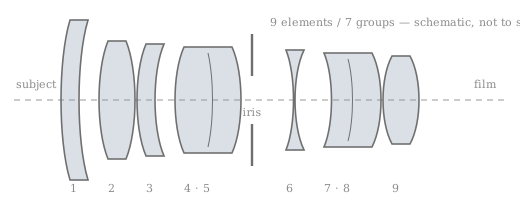
History
Nikon spent almost ten years between the 2.8cm f/3.5 of March 1960 and a 24mm lens, and Kouichi Ohshita’s account of why is the most useful thing written about this design. A retrofocus lens shorter than 28mm was, in his words, uncharted territory; the optical design report from those years is thick with trial data because there was no fast computer to trace rays through a wide field, and the arrangement that would hold performance across that field was still being found by hand.
The obstacle that mattered was not resolution at infinity but what happened at three feet. Retrofocus wide-angles generate astigmatism as they focus close, and the corners go soft. Nikon’s answer on the 2.8cm f/3.5 had been to forbid the problem — the lens stops focusing at 60cm. Competitors’ 28mm lenses focused nearer, customers noticed, and Wakimoto Zenji would not fix it the easy way. Racking the whole lens further would shorten the minimum distance and ruin the picture taken at it, and every super-wide Nikon had yet to design would inherit the fault. What he proposed instead was to split the lens between the sixth and seventh elements and let that gap close as the barrel focuses. The separation is computed so that changing it barely touches spherical aberration and moves astigmatism a great deal; the astigmatism generated by focusing close is cancelled by the astigmatism generated by the gap. Shimizu Yoshiyuki did the basic design, Wakimoto supplied the mechanism, and the NIKKOR-N Auto 24mm f/2.8 reached the market in June 1967 as the first lens anywhere to carry close-range correction. The figures engraved on the focus ring — 0.3m, 1 foot — are the whole point of the lens.
The versions divide into two computations rather than the usual one. Everything from 1967 to 1977 is nine elements in seven groups: the Nippon Kogaku barrel, then the Nikon barrel of 1971, then the multicoated N·C of 1972, then the K of 1975 with seven blades and f/22 in place of six and f/16. That is 227,289 lenses on the original computation, by Vink’s arithmetic. Then in January 1977 the Ai opened a new serial block at 525001 with nine elements in nine groups — both cemented pairs separated — and nothing on the outside of the barrel says so. Ohshita, writing about the older lens, mentions in passing that his own Ai sample has better field flatness and that its elements are the same ones in the AF Nikkor 24mm f/2.8D. That is the only confirmation Nikon has published that the two designs differ, and it appears inside an essay about a different version.
After 1977 the story is mounts, not glass. The Ai-S of August 1981 halves the focus throw to 80°, moves the depth-of-field marks to a chrome ring, and picks up Super Integrated Coating partway through its run. The AF of September 1986 puts a screwdriver coupling and a plastic focus ring on the same computation; the AF New of 1991 swaps the twist aperture lock for a slide; the AF-D of April 1994 adds distance reporting. The Ai-S and the AF-D both ran until 2020, thirty-nine and twenty-six years respectively, and Vink’s serial spans put the whole family at about 814,300 lenses.
What is missing is the factory record. Nikon has published no production figure for any version, no cross-section of the 1977 redesign, no dated price for the 1967 lens — the ¥70,000 on Nikon’s own page belongs to the Ai-S — and no statement of why the computation changed when it did. Rørslett, who rates the lens highly and warns that its lateral colour becomes expensive on a high-resolution sensor, dates close-range correction to 1968; Nikon and Vink both say 1967. The lens that solved close focus for wide-angle photography has left almost no paperwork behind it.
This history is AI-written, from the sources listed at the foot of the page. Where the record is silent it says so rather than filling the gap — but no human wrote these sentences.
Example photos

.jpg)
.jpg)
Sample photo wanted — shot with a Nikkor 24mm f/2.8? We'd love to feature it (with credit).
Live listings
Asking price, USD: a median of $130 across 57 fixed-price listings on 2026-09-11 (middle half $95–$190). Tracked since 2026-09-06, 2 days: up 2% from $130.
By day
| Date | Median | Middle half | Listings |
|---|---|---|---|
| 2026-09-11 | $130 | $95–$190 | 57 |
| 2026-09-06 | $130 | $92–$150 | 46 |
Asking prices from the listings scanned, not sales; junk-flagged rows and auction lots excluded; other currencies are not converted.
- [N.Mint] Nikon Nikkor-N.C Auto 24mm F2.8 Non-Ai MF Wide Angle Lens Japan #9493
- Vintage Nippon Kogaku Nikkor-N Auto 24mm f/2.8 Non-AI Manual Focus Lens - Japan
- 【EXC+4】 Nikon Nikkor N.C NC Auto 24mm f/2.8 non Ai MF Wide Angle Lens from JAPAN
- [Exc+4] Nikon Ai-s Nikkor 24mm f/2.8 MF Wide Lens From JAPAN
- Nikon Nikkor N Auto 24mm f2.8 Wide Angle Lens – AI Modified
- Nikon Nikkor-N 24mm f2.8 Non-AI Photomic Wide Angle Lens [GOOD]
- EXC!!! Nikon Nikkor N-C 24mm f/2.8 prime MF Wide Angle Non-AI Lens
- Nikon Nikkor 24mm F2.8 Non AI Mount Lens For SLR / Mirrorless Cameras
- Nikon 24mm f/2.8 NIKKOR AI Manual Focus Lens {52 mm} - (w/o caps)
- Nikon NIKKOR-N Auto 24mm f/2.8 Wide Angle Manual Focus Non-AI Lens SN 342274
- [Near MINT] Nikon New Nikkor 24mm f/2.8 Non-AI MF Wide Angle Lens From JAPAN
- *Read Nikon Ai-s AIS Nikkor 24mm F/2.8 MF Wide Angle Lens From JAPAN 2920727
- Nikon Nikkor 24mm f/2.8 AI Lens 511216 With Lens Caps - Good - Read Description
- Nikon Nikkor-N 24mm f2.8 Non-AI Photomic Wide Angle Lens [EXC-]
- Nikon Nikkor-N.C 24mm f2.8 Non-AI Photomic Wide Angle Lens [EXC-]
- Nikon NIKKOR 24mm f/2.8 MF Lens
- Nikon Brand AF NIKKOR 24mm f/2.8 Autofocus Camera Lens {52mm}
- Nikon Nikkor-N 24mm f2.8 Non-AI Photomic Wide Angle Lens [EXC-]
- [Near MINT] Nikon New Nikkor 24mm f/2.8 non Ai MF Lens From JAPAN
- [Near Mint] Nikon Ai-s Nikkor 24mm f/2.8 MF Wide Angle Lens from Japan #8124
Show 150 more listings
- [MINT] Nikon New Nikkor 24mm f/2.8 Ai Converted MF Lens From JAPAN
- [Near MINT] Nikon AF NIKKOR 24mm f/2.8 Wide Angle Prime Lens From JAPAN
- [MINT] Nikon Ai Nikkor 24mm f2.8 MF Wide Angle Lens From JAPAN
- Nikon AF Nikkor 24mm f/2.8 Wide Angle Prime Lens JAPAN
- Nikon Ai-s NIKKOR 24mm f/2.8 MF Wide Angle Prime Lens "Excellent" Japan #8511
- [MINT] Nikon ai-s 24mm f/2.8 From JAPAN
- Nikon New Nikkor 24mm f/2.8 non Ai MF Wide Lens From JAPAN [Near Mint] #0705
- *Near Mint ++* Nikon Ai Nikkor 24mm F/2.8 Wide Angle MF Lens From Japan
- Nikon NIKKOR-N Auto 24mm f/2.8 "Light Focus Excellent" 8046 Wide Angle Lens
- [Top MINT] Nikon Ai Nikkor 24mm f/2.8 Wide Angle MF Lens Fast Shipping JAPAN
- Nikon Ai NIKKOR 24mm f/2.8
- Near MINT Nikon Nikkor N 24mm f/2.8 MF Manual Focus Wide Angle Lens JAPAN
- [Near Mint] Nikon AI Nikkor 24mm f/2.8 Wide MF Lens Nikon F Mount SLR Japan
- 【MINT】 Nikon AF Nikkor 24mm f/2.8 Wide Angle Lens for F Mount Camera From JAPAN
- [Top MINT in Box] Nikon AF NIKKOR 24mm f/2.8 Wide Angle Prime Lens From JAPAN
- Nikon Nikkor 24mm f2.8 Late non-AI [EXC]
- Nikon Nikkor Ai-s AIS 24mm f2.8 MF Wide Angle Ais Lens [ Near MINT+ ] JAPAN #235
- Nikon AF NIKKOR 24mm F2.8 Black Compact Wide Angle Prime Lens F-Mount Exc++
- [Exc+5] Nikon Ai Nikkor 24mm f/2.8 MF Manual Focus Wide Angle Lens From JAPAN
- [TOP MINT] Nikon Ai-s AIS Nikkor 24mm F2.8 Wide Angle MF Prime Lens From Japan
- beautiful [Top MINT] Nikon AF Nikkor 24mm F2.8 D Wide Angle Lens F Mount JAPAN
- Nikon Ai-S Nikkor 24mm f/2.8 Wide Angle MF Lens From Japan Near Mint DDP #5
- Nikon Ai NIKKOR 24mm f/2.8 Wide Angle Manual Focus Lens w/ Caps Test Photos
- [Near MINT] Nikon New NIKKOR 24mm f/2.8 AI Converted Wide Angle Lens JAPAN
- [Almost Unused] Nikon AF Nikkor 24mm f/2.8 D Wide Angle Lens F Mount from JAPAN
- [US 1-Yr Warranty] Nikon AF Nikkor 24mm F/2.8 D Wide Angle Lens From JAPAN
- Nikon Nikkor AI-S 24mm f2.8 Lens AIS
- Nikon NIKKOR 24mm f/2.8 Ai'd L#461377
- Nikon Nikkor AIS AI-S 24mm f2.8 35mm camera Lens
- Nikon Nikkor AIS AI-S 24mm f2.8 35mm camera Lens
- Nikon Ai-s Ais Nikkor 24mm f/2.8 MF Wide Angle Lens Tested w/ Caps
- [Top MINT] NIKON AF Nikkor 24mm F/2.8 D Wide Angle Lens for F Mount From JAPAN
- Nikon AF NIKKOR 24mm f/2.8
- Nikon Nikkor 24mm f2.8 AI-S Wide Angle Lens [GOOD]
- [Top MINT] Nikon AF NIKKOR 24mm f/2.8 D Wide Angle Prime Lens From JAPAN
- Nikon Nikkor 24mm f2.8 AF-D Auto Focus Wide Angle Lens [EXC]
- Nikon Nikkor 24mm f2.8 AI-S Wide Angle Lens [EXC+]
- [N.Mint] Nikon Nikkor-N.C Auto 24mm F2.8 Non-Ai MF Wide Angle Lens Japan #9493
- [ EXC+5 ] Nikon Nikkor-N Auto 24mm f/2.8 Non-Ai Wide Angle Lens From Japan #2795
- Nikon Nikkor 24mm f2.8 Ais manual focus lens. Please Read
- VERY GOOD Nikon Non Ai NIKKOR-N.C Auto 24mm F/2.8 Prime Lens
- Nikon Nikkor-N.C Auto 24mm f/2.8 non Ai Manual Focus Lens [Near Mint]
- EXCELLENT Nikon NON Ai NIKKOR 24mm F/2.8 Prime Lens
- [Near MINT] Nikon NIKKOR-N.C Auto 24mm f/2.8 AI converted F Mount Lens JAPAN
- Nikon AF Nikkor 24mm f/2.8 Wide Angle Prime Lens F Mount
- [Near MINT] Nikon NIKKOR-N Auto 24mm f/2.8 Non-Ai MF Wide Angle Lenss From JAPAN
- Nikon Nikkor N Auto Non Ai 24mm f/2.8 Wide Angle Lens
- Nikon AF Nikkor 24mm f/2.8 Wide Angle Prime Lens F Mount
- Nikon NIKKOR-N Auto 24mm f/2.8 Ai Converted Lens
- Vintage Nikon Nikkor 24mm f2.8 wide angle lens
- [Exc+++] Nikon NIKKOR-N.C Auto 24mm f/2.8 Ai Converted Lens #3791A
- Nikon Ai NIKKOR 24mm f/2.8
- Nikon NIKKOR-N Auto 24mm f/2.8 "Light Focus Excellent" 8046 Wide Angle Lens
- Mint Nikon Nikkor AF 24mm f/2.8 Wide Angle Lens from Japan #0412
- Nikon AF NIKKOR 24mm F2.8 Black Compact Wide Angle Prime Lens F-Mount Exc++
- Nikon New Nikkor 24mm f/2.8 non Ai MF Wide Lens From JAPAN [Near Mint] #0705
- "N.Mint" Nikon AF Nikkor 24mm f2.8 Auto Focus Wide Angle Lens From Japan #838
- EXCELLENT Nikon Ai NIKKOR 24mm F/2.8 Prime Lens
- EXCELLENT Nikon AF NIKKOR 24mm F/2.8 Prime Lens
- [Top MINT] Nikon New Nikkor 24mm f/2.8 Non Ai MF F Mount Lens From JAPAN
- Nikon Ai NIKKOR 24mm f/2.8
- Nikon Nikkor AF 24mm f/2.8 Wide Angle Prime Lens FX DX Vintage Manual Focus
- Nikon Nikkor-N Auto 24mm f2.8 Prime Manual Focus Lens AI Converted (321548)
- [TOP MINT] Nikon Nikkor-N.C Auto Non-Ai 24mm f/2.8 Wide Angle Lens JAPAN 3044315
- Nikon New NIKKOR 24mm f/2.8 Ai Converted "Near Mint Light Focus" 0246 Japan Made
- NIKON AI NIKKOR 24MM F2.8 PRIME WIDE ANGLE MANUAL LENS FULL FRAME 87
- Nikon 24mm F2.8 Ai Nikkor [Near Mint] Tested From Japan 380
- Nikon Nikkor Ai-s AIS 24mm f2.8 MF Wide Angle Ais Lens [ Near MINT+ ] JAPAN #235
- US include tax Nikon Ai-s Nikkor 24mm F/2.8 #759188 MF Wide Angle Lens Exc+5 JPN
- SIC Ver S/N845x [MINT] Nikon Nikkor Ais AI-s 24mm f2.8 Wide Angle Lens FromJAPAN
- Nikon Nikkor 24mm f2.8 AI CRC Manual Wide Angle Lens - Film/Digital
- Nikon AF Nikkor 24mm F/2.8 Wide Angle Prime Lens Box *Near Mint* #5847
- Nikon AF Nikkor 24mm f/2.8 Lens – Excellent Condition – FX/Film Wide‑Angle
- EXCELLENT 【Serviced】 Nikon Ai NIKKOR 24mm F/2.8 Prime Lens
- EXCELLENT SIC Nikon Ai-S NIKKOR 24mm F/2.8 Prime Lens
- EXCELLENT Nikon Ai-S NIKKOR 24mm F/2.8 Prime Lens
- Nikon Nikkor 24mm f/2.8 Ai-s Wide Angle Prime Lens
- Nikon AF Nikkor 24mm f2.8 Extra Wide Prime Auto Focus Lens for Nikon AF Mount
- [TOP MINT] Nikon Ai-s AIS Nikkor 24mm F2.8 Wide Angle MF Prime Lens From Japan
- [Top MINT] Nikon Ai-s Nikkor 24mm f/2.8 MF Wide Lens From JAPAN #1069
- beautiful [Top MINT] Nikon AF Nikkor 24mm F2.8 D Wide Angle Lens F Mount JAPAN
- Nikon Ai-S Nikkor 24mm f/2.8 Wide Angle Prime MF Lens No Fungus Near Mint Japan
- SIC Final 900xxx [MINT] Nikon Ai-s Ais Nikkor 24mm f/2.8 MF Wide Lens From JAPAN
- Vintage Lens Nikon Nikkor 24mm f2.8 AIS Black Super Wide Angle Manual Focus Lens
- Nikon 24mm f/2.8 AI-S Nikkor F-mount Manual Focus Lens
- Nikon 24mm F/2.8 D AF NIKKOR Wide Angle Auto Focus Lens - Mint
- [ EXC+5] Nikon Nikkor-N Auto 24mm f/2.8 Non-Ai Weitwinkelobjektiv aus Japan...
- Nikon Nikkor-N.C Auto 24mm f/2.8 non Ai Manual Focus Lens [Near Mint]
- Nikon NIKKOR NON Ai NIKKOR 24mm f/2.8 Objectif Photo Angle Large Manuel
- Nikon Nikkor 24mm f/2.8 MF (AI ?) – Lichtstarkes Vintage-Weitwinkel – Top
- Nikon Nikkor 24mm f/2.8 Pre Ai
- [Exc+++] Nikon NIKKOR-N.C Auto 24mm f/2.8 Ai Converted Lens #3791A
- Nikon AF Nikkor 24mm f/2.8
- [Neuwertig] Nikon Ai NIKKOR 24mm f2.8 MF Weitwinkel Prime Objektiv F Mt aus J...
- Nikon AF Nikkor 24mm f/2.8 FX, lesen /read !
- [Top NEUWERTIG] Nikon Nikkor-N Auto 24mm f/2.8 non Ai Manual Focus Objektiv...
- [Neuwertig] Nikon AF Nikkor 24mm f/2.8 Non-D Weitwinkel Prime Objektiv F Moun...
- Nikon Nikkor-NC Auto 24mm f/2.8 Weitwinkel MF Objektiv *Top+5* #4456
- Nikon Nikkor 2,8/24 Non-Ai Nikon F Wide Angle Lens 24mm f/2.8
- NIKKOR 24mm F/2.8 - Nikon F non Ai lens
- Nikon Af Nikkor 24mm F/2.8 (grand angle)
- 🎦 Nikon Ai Nikkor 24mm F/2.8 Weitwinkel MF Objektiv #563824 JP
- schönes [Top NEUWERTIG] Nikon AF Nikkor 24mm F2.8 D Weitwinkelobjektiv F...
- Nikon Nikkor Ai-s AIS 24mm f2.8 MF Weitwinkel Ais Objektiv [Near Mint+]...
- [NEUWERTIG] Nikon Ai-s Nikkor 24mm f/2.8 MF Weitwinkelobjektiv aus JAPAN
- Nikon AF Nikkor 24mm f/2.8, FX
- US inklusive Steuer Nikon Ai-s Nikkor 24mm F/2.8 #759188 MF Weitwinkelobjekti...
- Nikon AF Nikkor 24mm F/2.8 Wide Angle Prime Lens Box *Near Mint* #5847
- Nikon Ai-S Nikkor 24mm f/2.8 Weitwinkel MF Objektiv aus Japan Near Mint DDP #5
- [Mint] Nikon Nikkor 24mm F2.8 Weitwinkel Nicht Ai Mf Objektiv W/Kapuze HN-1
- Nikon Ai Nikkor 24Mm F/2.8 Mf Manuelle Fokus Weitwinkelobjektiv Aus JAPAN
- Nikon Nikkor 2,8/24 AiS Wide Angle Lens 24mm f/2.8 Weitwinkel Objektiv
- US inklusive Steuer Opt NMINT Nikon Ai-s Nikkor 24mm F/2.8 #39617 MF Weitwink...
- [TOP NEUWERTIG] Nikon Ai-s AIS Nikkor 24mm F2.8 Weitwinkel MF Prime...
- Nikon Nikkor-NC Auto 24mm F2.8 - Leica Store Heidelberg
- 【Top NEUWERTIG】 Nikon Ai Nikkor 24mm f/2.8 MF Weitwinkelobjektiv F Mount...
- Objectif Prime Grand Angle Nikon Ai NIKKOR 24mm F/2.8 Manuel 52mm
- SIC SN 844xxx [Top NEUWERTIG] Nikon Ai-s Ais Nikkor 24mm f/2.8...
- 📷 Nikon NIKKOR 24mm f/2.8 | Nikon F Mount | Manual Focus Wide-Angle
- NIKON AF NIKKOR 24mm f/2.8 D - OTTICA "MADE IN JAPAN", UN CLASSICO PER NIKON FX
- Nikon AI Nikkor 24mm f/2.8 Weitwinkel MF Objektiv AI F Mount SHP 310617
- Nikon NIKKOR 24mm f/2.8 AI-S Fixed Prime Wide Angle Lens MPN 2428
- SIC 844039 [Top Mint] Nikon Ai-S Nikkor 24mm F2.8 MF Weitwinkelobjektiv aus...
- [MINT] Nikon Ai-S Nikkor 24mm f/2.8 AIS MF Wide Angle Lens Late S/N 903xxx JAPAN
- Nikon F schwarz Photomic 35mm + Nikkor 24mm f/2.8 Vintage Japan Spiegelreflex Analogica
- NIKON Z 14-24MM F/2.8 S
- Nikon Ai-S NIKKOR 24mm F/2.8 単焦点レンズ
- SIC Nikon Ai-S NIKKOR 24mm F/2.8 単焦点レンズ
- Nikon 非Ai NIKKOR-N.C Auto 24mm F/2.8 単焦点レンズ
- Nikon 非Ai NIKKOR 24mm F/2.8 単焦点レンズ
- Nikon 非Ai NIKKOR 24mm F/2.8 単焦点レンズ
- Nikon 非Ai NIKKOR-N.C Auto 24mm F/2.8 単焦点レンズ
- Nikon 非Ai NIKKOR-N.C Auto 24mm F/2.8 単焦点レンズ
- 【Serviced】 Nikon 非Ai NIKKOR 24mm F/2.8 単焦点レンズ
- Nikon Ai NIKKOR 24mm F/2.8 単焦点レンズ
- Nikon Ai NIKKOR 24mm F/2.8 単焦点レンズ
- Nikon AI NIKKOR N.C Auto 24mm F/2.8 単焦点レンズ
- 【Serviced】 Nikon Ai NIKKOR 24mm F/2.8 単焦点レンズ
- 【Serviced】 Nikon Ai NIKKOR 24mm F/2.8 単焦点レンズ
- Nikon Ai-S NIKKOR 24mm F/2.8 単焦点レンズ
- Nikon Ai-S NIKKOR 24mm F/2.8 単焦点レンズ
- Nikon Ai-S NIKKOR 24mm F/2.8 単焦点レンズ
- Nikon 非Ai NIKKOR 24mm F2.8 [F] ※整備済品
- 【Serviced】 Nikon Ai-S NIKKOR 24mm F/2.8 単焦点レンズ
- "N.Mint" Nikon AF Nikkor 24mm f2.8 Auto Focus Wide Angle Lens From Japan #838
- EXCELLENT Nikon Ai NIKKOR 24mm F/2.8 Prime Lens
- Nikon 24mm f2.8 D
- Nikon 24mm F2.8 AI
- Nikon 24mm f2.8 Nikkor Pre-AI - cl'a July 2024
- Nikon AF Nikkor 24mm F2.8 D — SN 452395
eBay links are affiliate links. If you buy through one, Glass Bodies earns a small commission from eBay at no cost to you. It does not change which listings appear, their prices or their order — those come from the search and the sort described above.
Listings updated 2026-09-11. Links go to the shop or marketplace that carries the item.