Nikkor 180mm f/2.8 ED
Nippon Kogaku · Nikon F · 1981 · Telephoto, then internal focusing
our own findingAlso known as: Ai-S Nikkor 180mm f/2.8 ED · AI Nikkor ED 180mm F2.8S · Nikkor 180mm f/2.8 ED AIS · AF Nikkor 180mm f/2.8 IF-ED · AF Nikkor 180mm f/2.8D IF-ED · Nikon 180/2.8 ED · ニッコール 180mm F2.8 ED
Variants & identification
| Variant | Mount | Years | Serial ranges | Production |
|---|---|---|---|---|
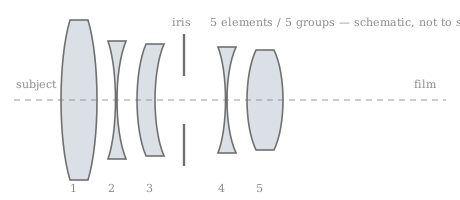
| Ai-S Nikkor 180mm f/2.8 ED · Five elements in five groups, telephoto type; ED front element, with a specially selected glass in the second, concave element | Nikon F | 1981–2005 | 380001–454048 | 74,048 (Vink, counted from collected serial numbers) |
| AF Nikkor 180mm f/2.8 IF-ED · Eight elements in six groups, internal focusing; one ED element | Nikon F | 1986–1987 | 200001–211081 | 11,081 (Vink) |
| AF Nikkor 180mm f/2.8 IF-ED (New) · Eight elements in six groups, internal focusing; one ED element | Nikon F | 1987–1995 | 250001–299557 | 49,557 (Vink) |
| AF Nikkor 180mm f/2.8D IF-ED · Eight elements in six groups, internal focusing; one ED element | Nikon F | 1994–2020 | 400001–419070 500001–500080 600001–611155 | 30,305 across three serial series (Vink) |
- Vink's quantity column is derived from the serial numbers he has collected, not from Nikon records. Nikon has published no production figure for any version of this lens, and none of the figures here should be read as one.
- Construction and specification by version, from Vink's specification table: pre-ED Nikkor-P and Ai, 5 elements in 4 groups, f/32, 1.8m, 7 blades, 880g; Ai-S ED, 5 in 5, f/32, 1.8m, 9 blades, 800g; AF IF-ED, 8 in 6, f/22, 1.5m, 9 blades, 750g; AF New and AF D, 8 in 6, f/22, 1.5m, 9 blades, 760g. Filter size is 72mm on all of them.
- The dates do not quite agree. Nikon's own account says multicoating reached the 180mm f/2.8 in 1976 and that the AI Nikkor 180mm f/2.8 ED was released in 1981; Vink dates the multicoated P·C block to June 1975 and puts an ED prototype at September 1980. Both are recorded; neither is preferred here.
- Ai conversion kit 48 fits the pre-Ai 180mm f/2.8, per Vink's conversion list. The ED lens was born Ai-S and needs nothing.
How to tell them apart
- ED on the barrel: no 180mm f/2.8 made before 1981 carries it, and the pre-ED lens is a different optical design
- 72mm filters and a sliding built-in hood on every version
- Nine blades throughout — the seven-bladed 180s are the pre-ED lenses
Ai-S Nikkor 180mm f/2.8 ED:
- MADE IN JAPAN uncoloured on the barrel, five cross-head screws in the mount
- Nine blades where the pre-ED lens had seven
- Stops to f/32 and focuses to 1.8m; 800g
AF Nikkor 180mm f/2.8 IF-ED:
- Plastic barrel — the first sub-run has a plastic focusing ring, replaced by a rubber one around 2065xx
- Stops to f/22, not f/32, and focuses to 1.5m; 750g
AF Nikkor 180mm f/2.8 IF-ED (New):
- Crinkle finish rather than smooth plastic
- Two rows of grip on the aperture ring
- A manual/autofocus switch, which the first version lacks
AF Nikkor 180mm f/2.8D IF-ED:
- Three rows of grip on the aperture ring
- D — the lens reports focused distance to the body for flash and matrix metering
- Ai-S Nikkor 180mm f/2.8 ED: Vink records a single prototype at 380001's predecessor block, serial 370001, dated September 1980 — five months before the production run opens in March 1981.
- AF Nikkor 180mm f/2.8 IF-ED: One of the lenses that launched Nikon's autofocus system alongside the F-501 of 1986. Internal focusing is what made a lens this heavy focusable by a screw drive: only part of the optics moves.
Serial-range notes
- 370001
- One prototype, September 1980, the only example Vink has seen from that block. Production opens six months later at 380001.
- 312011–378551
- The pre-ED lens, and a different optical design: five elements in four groups, seven blades, 880g. Vink splits it into the Nikkor-P Auto (312011–313379, 1,369 lenses, June 1970 to 1971), the Nikkor-branded P Auto (320001–336108, 16,108, 1971 to January 1974), the multicoated P·C (350001–353162, 3,162) and the Ai (360001–378551, 18,551, 1977 to October 1981). Roughly 39,000 in all — about half the ED lens managed on its own.
- 400001, 500001, 600001
- The autofocus D lens restarts its numbering three times: a run from 1994, a block of 80 lenses in 2005, and a fresh 6-series from 2006 that runs to 2020. The same 2005 and 2006 restarts appear on the 105mm and 135mm DC lenses.
Specifications
- Formula
- Telephoto, then internal focusing
- Construction
- 5 elements / 5 groups
- Aperture range
- f/2.8
- Diaphragm blades
- 9
- Min. focus
- 1.8 m
- Dimensions
- 78.5 mm diameter
- Weight
- 800 g
- Filter
- 72 mm
- Years manufactured
- 1981–2020
- Country
- Japan
What reviewers say
- Bjørn Rørslett (blog) — He rates the manual ED lens 5 out of 5 on film, calls its optical quality superb thanks to the ED element and a modern formula, and warns that the pre-ED Nikkor-P versions are inferior — not bad lenses, but the ED sets a tall order. He also flags a severe hot spot in infrared work.
- Bjørn Rørslett (blog) — On the autofocus IF-ED he is blunter: among the finest Nikkors ever made on optics, and never in any hall of fame on handling — sluggish autofocus, a plastic barrel that feels cheap, and a focus collar that never fully decouples.
Optical formula — Telephoto, then internal focusing
History
Matsui Sei’s first interchangeable lens for the Nikon F was a 180mm f/2.8. Nikon released it to the press for the Sapporo pre-Olympics in 1970 and to everyone else in 1971, and it stayed in the catalogue, multicoated and then Ai-coupled, until October 1981. It was five elements in four groups, seven blades, 880 grams, and by the end of the 1970s it was being beaten by its own successors elsewhere in the line.
The brief for the replacement was narrow: improve the performance without changing the size. Matsui’s answer was a new telephoto type of five elements in five groups — nothing cemented — with extra-low-dispersion glass in the front element and a specially selected glass in the second, concave one. Both changes attack the same fault. A fast telephoto brings the colours to slightly different focal planes, and at 180mm and f/2.8 that shows as fringing on every high-contrast edge. ED glass is the expensive way to stop it.
What made the 1981 lens matter was not that it worked but where it landed. ED glass had been the preserve of the 300mm f/2.8 and the long professional teles, lenses bought by agencies. At 180mm, 800 grams and 72mm filters it was a lens an enthusiast could carry and afford, and mir.com.my still describes it as “perhaps the cheapest Nikkor lens you can buy with an ED glass designation”. It also came out lighter than the lens it replaced, which is not the usual direction for an optical upgrade.
Autofocus broke the design again. The AF Nikkor 180mm f/2.8 IF-ED of September 1986, one of the lenses that launched the F-501, is not the ED lens with a screwdriver socket: it is eight elements in six groups with internal focusing, because a screw drive cannot swing a five-element block fast enough. It focuses closer, to 1.5m, and stops one stop short of the manual lens at f/22. Bjørn Rørslett rates both at the top of his scale and prefers the autofocus lens on every optical count but one — a trace of colour fringing outside the plane of focus, which is what internal focusing tends to cost.
Vink’s serial counts give 74,048 for the manual ED lens across twenty-four years, 11,081 and 49,557 for the two pre-D autofocus versions, and 30,305 for the D lens across three restarted serial series ending in 2020. Those are spans of collected numbers, not factory records. Nikon has published no production figure for any version of this lens, and none for the pre-ED lens either, so the ratio that would settle how much of the line’s life belonged to the ED design — the thing the entry is named for — remains an inference from one man’s database rather than a fact.
This history is AI-written, from the sources listed at the foot of the page. Where the record is silent it says so rather than filling the gap — but no human wrote these sentences.
Example photos

Sample photo wanted — shot with a Nikkor 180mm f/2.8 ED? We'd love to feature it (with credit).
Live listings
Asking price, USD: a median of $230 across 51 fixed-price listings on 2026-09-11 (middle half $180–$260). Tracked since 2026-09-06, 2 days: unchanged from $230.
By day
| Date | Median | Middle half | Listings |
|---|---|---|---|
| 2026-09-11 | $230 | $180–$260 | 51 |
| 2026-09-06 | $230 | $180–$260 | 51 |
Asking prices from the listings scanned, not sales; junk-flagged rows and auction lots excluded; other currencies are not converted.
- Nikon ED AF Nikkor 180mm f/2.8 D *Haze*
- Nikon Nikkor ED 180mm f/2.8 Ai-s Manual Focus Telephoto Lens
- Nikon Nikkor AI-S 180mm f2.8 *ED Lens AIS *Read #936
- Nikkon Nikkor AF 180mm F/2.8 IF-ED Lens
- Nikon Ai-s Nikkor 180mm f2.8 ED MF Lens From JAPAN
- Fast Ship[Exc+5 w/Cap]Nikon NIKKOR ED 180mm f/2.8 AI-S AIS MF Lens JAPAN#2975148
- [Near MINT-] Nikon AF Nikkor 180mm f2.8 ED Telephoto Lens F Mount From JAPAN
- Nikon Nikkor AI-S 180mm f2.8 *ED Lens AIS #053
- APP MINT!! [Exc+5] Nikon AF NIKKOR 180mm f/2.8 ED Telephoto Lens From JAPAN
- READ [Exc+5]Nikon Ai-s Ais Nikkor ED 180mm f/2.8 Telephoto Manual MF From JAPAN
- Nikon NIKKOR*ED 180mm f/2.8 AI-S Manual Focus Lens Made in Japan
- Nikon Ai-S Nikkor 180mm f/2.8 ED MF Telephoto Lens From JAPAN *EXC+5* DDP US
- Nikon AF NIKKOR 180mm F2.8 ED IF
- Nikon NIKKOR*ED 180mm f/2.8 AI-S Manual Focus Lens Made in Japan Tested Working
- [Near MINT] Nikon AF Nikkor 180mm f/2.8 ED Telephoto Lens For F Mount From JAPAN
- Nikon1464 Nikkor AI-S Ed 180mm f/2.8 Manual Focus Telephoto Lens
- Nikon Nikkor AF 180mm f2.8 ED Lens 25
- Nikon AF Nikkor 180mm f/2.8 ED IF Telephoto Prime Lens F Mount
- [EXC+++++] Nikon Ai-s Nikkor ED 180mm F/2.8 MF Telephoto Lens from Japan
- Nikon Nikkor Ai-s Ed 180mm f/2.8 Manual Focus Telephoto Lens
Show 138 more listings
- [Near MINT] Nikon AF Nikkor 180mm f/2.8 IF ED Telephoto Lens For F From JAPAN
- Nikon AF Nikkor ED 180mm F/2.8 IF Telephoto Prime Lens From Japan w/Cap
- [Near MINT] Nikon AF Nikkor 180mm f2.8 ED Telephoto Lens For F Mount From JAPAN
- Nikon AF NIKKOR 180mm F2.8 ED IF Telephoto Lens for F Mount #260901c
- Nikon nikkor AF 180mm f/2.8 D ED for F mount Lens from Japan [EXC5] 1367
- Nikon Nikkor AF 180mm f2.8 ED IF Lens Late #100
- [Near MINT] Nikon AF NIKKOR 180mm f/2.8 IF-ED Telephoto Lens F Mount From JAPAN
- 🎦👀✨Opt Top MINT✨ Nikon Ai-s Nikkor ED 180mm f/2.8 From JAPAN
- [Almost MINT] Nikon AF Nikkor 180mm f/2.8 ED Telephoto Lens Fast Shipping JAPAN
- 649 Nikon AF Nikkor 180mm F2.8 ED IF ***EXC+5*** Ship by DHL
- Nikon Nikkor AF 180mm f2.8 ED IF Lens Late #083
- 【Near MINT】Nikon ED AF Nikkor 180mm f/2.8 D Telephoto Prime From Japan
- 【Almost MINT】 Nikon Ais Ai-s Nikkor ED 180mm F2.8 Telephoto MF Lens From Japan
- [Top MINT] Nikon Ai-S Ais NIKKOR ED 180mm F2.8 MF Telephoto Prime Lens JAPAN
- [Serviced & Tested] Nikon Ai-s Nikkor 180mm F2.8 ED Super Sharp Telephoto 264
- [Top MINT] Nikon Ai-S Ais NIKKOR ED 180mm F/2.8 MF Telephoto Lens From JAPAN
- [Near Mint] Nikon AF NIKKOR 180mm F/2.8 ED Telephoto Lens
- [Opt Top MINT] Nikon ED AF Nikkor 180mm f/2.8 Telephoto Lens Box F Mount JAPAN
- Nikon Nikkor AF 180mm f2.8 D ED Lens #059
- [Top MINT] Nikon Ai-s Nikkor 180mm f/2.8 ED MF Lens From JAPAN 1414
- EXCELLENT Nikon Ai-S NIKKOR ED 180mm F/2.8 Prime Lens
- Pre-Owned Nikon 180mm f2.8 AF Nikkor ED #261622
- [MINT] Nikon Nikkor AF 180mm F2.8 IF ED Lens F mount Telephoto Lens From JAPAN
- Near MINT Nikon Ai-s Nikkor 180mm F2.8 ED MF Manual Focus Telephoto Lens JAPAN
- [Top MINT] Nikon ED AF Nikkor 180mm f/2.8 D Telephoto Prime Lens From JAPAN
- 【N MINT+++】Nikon Nikkor ED Ais Ai-s 180mm f/2.8 MF Camera Lens
- Nikon Ai-s Nikkor 180mm f/2.8 ED Telephoto MF Lens Ais From JAPAN [Mint] N2029
- Pre-Owned Nikon ED 180mm f2.8 Telephoto Lens #437082
- Opt. MINT Nikon Ai-s Nikkor 180mm f/2.8 ED MF Manual Focus Telephoto Lens JAPAN
- Nikon AF Nikkor 180mm f2.8 ED Telephoto Prime Lens for Nikon AF-D [MINT-]
- Pre-Owned Nikon 180mm f2.8 ED Ais Lens #449106
- [AS-IS] Nikon AF NIKKOR 180mm F/2.8 ED Telephoto Lens #3047950
- Nikon AF Nikkor 180mm f/2.8 ED , FX, !! Pilz /Fungus!!!
- APP NEUWERTIG!! [Exc+5] Nikon AF NIKKOR 180mm f/2.8 ED Teleobjektiv aus JAPAN
- Nikon Ai-s Nikkor 180mm f/2.8 ED #421237 Tele Manual MF AIS Lens From JAPAN
- Video*[Exc+5] Nikon AF Nikkor 180mm f/2.8 ED Teleobjektiv für F aus JAPAN #01
- Nikon AI-S Nikkor 180mm f/2.8 ED Tele MF Objektiv getestet Top+5
- Excellente Lentille Prime NIKKOR ED 180mm F/2.8 Ai-S Nikon
- NIKON Ai-S NIKKOR-ED 180mm f/2.8 Tele Prime Objektiv [Near Mint] #2 aus Japan
- Nikon AF Nikkor 180mm f/2.8 ED , FX, lesen /read
- Excellente Lentille Prime NIKKOR ED 180mm F/2.8 Ai-S Nikon
- Excellente Lentille Prime NIKKOR ED 180mm F/2.8 Ai-S Nikon
- 649 Nikon AF Nikkor 180mm F2.8 ED IF ***EXC+5*** Versand per DHL
- NIKON Ai-S NIKKOR-ED 180mm f/2.8 MF Tele Prime Objektiv [Near Mint] aus Japan
- 【Optik NEUWERTIG】 Nikon Ai-s Nikkor 180mm f/2.8 ED Teleobjektiv F Mount aus...
- Nikon AF Nikkor 180mm f/2.8 ED , FX
- [Top NEUWERTIG] Nikon Ai-S Ais NIKKOR ED 180mm F2.8 MF Tele Prime Objektiv JAPAN
- [Opt Top NEUWERTIG] Nikon ED AF Nikkor 180mm f/2.8 Teleobjektiv Box F Mount...
- [Top NEUWERTIG] Nikon Ai-S Ais NIKKOR ED 180mm F/2.8 MF Teleobjektiv aus JAPAN
- [NEUWERTIG] Nikon Ai-S Ais NIKKOR ED 180mm f/2.8 MF Tele Prime Objektiv aus...
- Nikon Ai-S Nikkor Ed 180mm F/2.8 Ais Mf Téléobjectif Photo De Japon #645
- [Fast neuwertig+++] Nikon AI-S Nikkor ED 180mm F2.8 Tele MF Objektiv aus Japan
- [Fast NEUWERTIG] Nikon Ai-s Nikkor 180mm f/2.8 ED MF Teleobjektiv aus JAPAN
- Nikon Ai-s Nikkor ED 180mm F/2.8 AIS MF Teleobjektiv Aus Japan #645
- [Fast neuwertig] Nikon Ai-S Ais NIKKOR ED 180mm f/2.8 MF Prime Teleobjektiv...
- [NEUWERTIG] Nikon Ai-s Ais Nikkor 180mm f/2.8 ED MF Teleobjektiv aus JAPAN -A...
- Nikon Ai-S NIKKOR 180mm f/2.8 ED "Exc+++++ Clear Opt" 8989 MF Teleobjektiv AIS
- Nikon Ai-S Ais NIKKOR ED 180mm f2.8 MF Tele Prime Objektiv Ist-Zustand [PILZ]...
- Nikon Nikkor ED 180mm f2.8
- Nikon Nikkor *ED 180mm Tele Lens f/2.8 180mm Teleobjektiv
- [Near Mint] Nikon Ai-S Ais NIKKOR ED 180mm F2.8 MF Tele Prime Objektiv #4046
- Nikon Ai-S Nikkor ED 180mm f/2.8 Teleobjektiv F Mount Near Mint Japan
- " N.Mint " Nikon Ai-S Nikkor Ed 180mm F/2.8 Ais Mf Téléobjectif Photo De Japon #
- ⏯️ [NEUWERTIG] Nikon Ai-s Ais Nikkor 180mm F/2.8 ED MF Teleobjektiv aus JAPAN...
- Nikon NIKKOR AF ED 180mm f/2.8 D Téléobjectif Fixe Monture Nikon AF
- N.Mint Nikon Ai-S Nikkor Ed 180mm F/2.8 Ais Mf Tele Objektiv Aus Japan #774
- Nikon Nikkor *ED 2,8/180 AiS Tele Lens 180mm f/2.8 Teleobjektiv
- EXCELLENT Nikon AI-S NIKKOR ED 180mm F/2.8 Teleobjektiv Festbrennweite
- EXCELLENT Nikon AI-S NIKKOR ED 180mm F/2.8 Teleobjektiv Festbrennweite
- EXCELLENT Nikon AI-S NIKKOR ED 180mm F/2.8 Teleobjektiv Festbrennweite
- USATO Nikon ED 180mm F2.8 D
- Video*[TOP NEUWERTIG] Nikon Ai-S Ais Nikkor 180mm f/2.8 ED Tele JP 1 #1 Tag...
- [Top NEUWERTIG] Nikon AF Nikkor 180mm f2.8 ED Teleobjektiv für F-Mount aus...
- [TOP NEUWERTIG] Nikon Ais Ai-s Nikkor ED 180mm F2.8 Tele MF Objektiv aus JAPAN
- Nikon Ai-s NIKKOR 180mm f/2.8 ED #234 AIS Tele Prime SIC Objektiv [Exc+3] Japan
- Nikon Ai/S 2,8/180 ED Teleobjektiv - Nikkor AI-S 180mm F/2.8 ED Tele Lens
- NIKON AF NIKKOR 180mm f/2.8 ED - UN CLASSICO DI CULTO PER IL RITRATTO
- [NEUWERTIG] Nikon Ais Ai-s Nikkor ED 180mm F/2.8 Tele MF Kamera Objektiv...
- [Top NEUWERTIG] Nikon ED AF Nikkor 180mm f2.8 D Teleobjektiv aus JAPAN
- AF Nikkor 180mm f/2.8 IF-ED
- 【NEAR MINT】Nikon Ai-S NIKKOR 180mm f2.8 ED MF Telephoto Standard Lens From...
- Nikon Ai-s Nikkor 180mm f2.8 ED MF Lens From JAPAN
- Fast Ship[Exc+5 w/Cap]Nikon NIKKOR ED 180mm f/2.8 AI-S AIS MF Lens JAPAN#2975148
- [Near MINT-] Nikon AF Nikkor 180mm f2.8 ED Telephoto Lens F Mount From JAPAN
- APP MINT!! [Exc+5] Nikon AF NIKKOR 180mm f/2.8 ED Telephoto Lens From JAPAN
- Nikon AF Nikkor 180mm f/2.8 ED Telephoto Lens 2932
- [Near MINT] Nikon Ai-S NIKKOR ED 180mm f/2.8 MF Telephoto Lens Tested From JAPAN
- Video*[Exc+5] Nikon AF Nikkor 180mm f/2.8 ED Telephoto Lens For F from JAPAN #01
- Nikon Ai-s Nikkor 180mm f/2.8 ED #421237 Telephoto Manual MF AIS Lens From JAPAN
- Nikon AF NIKKOR 180mm F2.8 ED IF Telephoto Lens for F Mount #260901c
- EXCELLENT Nikon Ai-S NIKKOR ED 180mm F/2.8 Prime Lens
- EXCELLENT Nikon Ai-S NIKKOR ED 180mm F/2.8 Prime Lens
- EXCELLENT Nikon Ai-S NIKKOR ED 180mm F/2.8 Prime Lens
- 649 Nikon AF Nikkor 180mm F2.8 ED IF ***EXC+5*** Ship by DHL
- [Near MINT] Nikon AF NIKKOR 180mm f/2.8 IF-ED Telephoto Lens F Mount From JAPAN
- 【Optics MINT】 Nikon Ai-s Nikkor 180mm f/2.8 ED Telephoto Lens F Mount From...
- Nikon ED AF Nikkor 180mm F2.8 Lens Excellent+++++!
- [Almost MINT] Nikon AF Nikkor 180mm f/2.8 ED Telephoto Lens Fast Shipping JAPAN
- ⏯️[Almost MINT] Nikon AF NIKKOR 180mm f/2.8 ED Telephoto Lens F Mount From JAPAN
- Nikon AF Nikkor 180mm f2.8 ED Lens Sharp Optics Fully Working MInor Damage
- Nikon Ai-S NIKKOR 180mm f/2.8 ED MF Telephoto Prime Lens [Near MINT] Japan
- [Top MINT] Nikon Ai-S Ais NIKKOR ED 180mm F/2.8 MF Telephoto Lens From JAPAN
- [MINT] Nikon Ai-s AIS Nikkor 180mm f2.8 ED ManualFocus Telephoto Lens From JAPAN
- [Opt Top MINT] Nikon ED AF Nikkor 180mm f/2.8 Telephoto Lens Box F Mount JAPAN
- [ MINT ] Nikon Ai-S Ais NIKKOR ED 180mm f/2.8 MF Telephoto Prime Lens From JAPAN
- [Near Mint] Nikon AF NIKKOR 180mm F/2.8 ED Telephoto Lens
- [MINT] ] Nikon Ai-s Nikkor * ED 180mm f/2.8 MF Lens From JAPAN
- [Almost MINT] Nikon Ai-s Nikkor 180mm f/2.8 ED MF Telephoto Lens From JAPAN
- Nikon Nikkor*ED 180mm f/2.8 AI‑S Lens – Nikon F Mount – Optically Very Good
- Nikon Ai-s Nikkor ED 180mm F/2.8 AIS MF Telephoto Lens from Japan #645
- [Near MINT+++] Nikon AI-S Nikkor ED 180mm F2.8 Telephoto MF Lens From Japan
- 【Almost MINT】 Nikon Ais Ai-s Nikkor ED 180mm F2.8 Telephoto MF Lens From Japan
- [Top MINT] Nikon Ai-s Nikkor 180mm f/2.8 ED MF Lens From JAPAN 1414
- [MINT] Nikon Ai-s Ais Nikkor 180mm f/2.8 ED MF Telephoto Lens From JAPAN -A940-
- [Near Mint]Nikon Ai-s Ais Nikkor 180mm F2.8 ED MF Telephoto Lens JAPAN #3015934
- Nikon Ai-S NIKKOR 180mm f/2.8 ED "Exc+++++ Clear Opt" 8989 MF Telephoto Lens AIS
- [Opt Top MINT] Nikon Ai-S Ais NIKKOR ED 180mm F2.8 MF Telephoto Lens From JAPAN
- [Near Mint] Nikon Ai-S Ais NIKKOR ED 180mm F2.8 MF Telephoto Prime Lens #4046
- Used Nikon AF 180mm f2.8 AF ED Nikkor Lens
- "N.Mint" Nikon Ai-s Nikkor ED 180mm F/2.8 AIS MF Telephoto Lens from Japan #774
- ⏯️ [MINT] Nikon Ai-s Ais Nikkor 180mm F/2.8 ED MF telephoto Lens From JAPAN K82
- [NEAR MINT+] Nikon AI-S AIS Nikkor ED 180mm f/2.8 Fast Telephoto MF Lens Japan
- 【N NEUWERTIG+++】Nikon Nikkor ED Ais Ai-s 180mm f/2.8 MF Kamera Objektiv
- [TOP MINT] Nikon Ais Ai-s Nikkor ED 180mm F2.8 Telephoto MF Lens From JAPAN
- [MINT] Nikon Ais Ai-s Nikkor ED 180mm F/2.8 Telephoto MF camera Lens From JAPAN
- [Unused 447xxx] Nikon Ai-s Nikkor 180mm f/2.8 ED Prime MF Lens Boxed From JAPAN
- EXCELLENT Nikon Ai-S NIKKOR ED 180mm F/2.8 Prime Lens
- EXCELLENT Nikon Ai-S NIKKOR ED 180mm F/2.8 Prime Lens
- EXCELLENT Nikon Ai-S NIKKOR ED 180mm F/2.8 Prime Lens
- Nikon Ai-s Nikkor ED 180mm F/2.8 AIS MF Telephoto Lens from Japan #645
- "N.Mint" Nikon Ai-s Nikkor ED 180mm F/2.8 AIS MF Telephoto Lens from Japan #774
- Nikon 180mm f2.8 ED
- Nikon AF Nikkor 180mm F2.8 IF-ED interchangeable lens [Excellent+++]
- Nikon Ai-S NIKKOR ED 180mm F/2.8 単焦点レンズ
- Nikon Ai-S NIKKOR ED 180mm F/2.8 単焦点レンズ
- Nikon Ai-S NIKKOR ED 180mm F/2.8 単焦点レンズ
- 【Serviced】 Nikon Ai-S NIKKOR ED 180mm F/2.8 単焦点レンズ
- Nikon 180mm f2.8 Nikkor*ED - test shot October 2025
eBay links are affiliate links. If you buy through one, Glass Bodies earns a small commission from eBay at no cost to you. It does not change which listings appear, their prices or their order — those come from the search and the sort described above.
Listings updated 2026-09-11. Links go to the shop or marketplace that carries the item.