Nikkor-H(·C) 5cm f/2
Nippon Kogaku · Nikon S + LTM · 1946 · Sonnar type, 6e/3g
Also known as: Nikkor 5cm f/2 · Nikkor 50mm f/2 · Nikkor-H·C 5cm f/2 · Nikkor H.C 5cm F2 · Nikkor-H 50mm f/2 · Nikkor-H·C 50mm f/2
Variants & identification
| Variant | Mount | Years | Serial ranges | Production |
|---|---|---|---|---|
| Nikon S collapsible / semi-rigid | Nikon S | 1946 | 60901–60919 (collapsible, Sep 1946) 708001–708723 (collapsible, Aug 1947; S + LTM interleaved) 806001–806607 (collapsible, Jun 1948; S + LTM interleaved) 8110001–8113024 (semi-rigid transitional batch, Nov 1948; S + LTM interleaved) | A few hundred to several hundred semi-rigid units in Nikon mount; genuinely collapsible S-mount examples rarer still |
| Leica thread mount | LTM | 1946–1962 | 60901–60919 (collapsible; mostly LTM, a handful in Nikon mount) 708001–708723 (collapsible; S + LTM interleaved) 806001–806607 (collapsible; S + LTM interleaved) 8110001–8113024 (semi-rigid; S + LTM interleaved) 617001–661464 (rigid chrome; S + LTM interleaved) 713163–724191 (chrome, satin filter ring; S + LTM interleaved) 724053–748084 (black; S + LTM interleaved) 748346–768343 (late black rigid; S + LTM interleaved) | — |
| Nikon S rigid | Nikon S | 1950–1962 | 50080101–50081069 (first rigid batch, Aug 1950) 617001–661464 (chrome; S + LTM interleaved) 713163–724191 (chrome, satin filter ring; S + LTM interleaved) 724053–748084 (black; S + LTM interleaved) 748346–768343 (black, plain 'H' engraving; S + LTM interleaved) | — |
How to tell them apart
Nikon S collapsible / semi-rigid:
- Collapsible head on the earliest barrels
- 811-batch barrels carry a factory sleeve between head and base that blocks collapsing (semi-rigid)
Leica thread mount:
- Leica screw mount with its own helicoid
- Late black rigid version nicknamed 'Blackbelt' by collectors
Nikon S rigid:
- Rigid barrel, chrome (175 g) or black (130 g)
- 'Tokyo' beauty ring on early chrome, 'Japan' from ~621800
- Occupation-era barrels have no aperture click stops
- Nikon S collapsible / semi-rigid: Rare. Many S-mount lenses built as collapsibles were factory-blocked with the 811-batch sleeve, so a true collapsing example in Nikon mount is the scarcest form of the family.
- Leica thread mount: Ran the full 1946–1962 life of the design in shared serial blocks with the S-mount version; the 1946 collapsible LTM lens is where the postwar product began.
- Nikon S rigid: The standard kit lens of the S-series bodies from August 1950 to 1962 — the highest-volume configuration of the family.
Serial-range notes
- 60901–60919
- Earliest postwar batch, collapsible, from September 1946 — a 19-serial span.
- 708001–708723
- Collapsible, from August 1947; early examples belong to the Nikon I era.
- 806001–806607
- Collapsible, from June 1948.
- 8110001–8113024
- Transitional batch from November 1948 — collapsible-built barrels fitted with a sleeve between head and base to prevent collapsing (semi-rigid).
- 50080101–50081069
- First rigid batch, August 1950 — batch code 5008 = August 1950 under the early year-month serial scheme; chrome, 175 g.
- 617001–661464
- Rigid chrome; the 'Tokyo' front marking gives way to 'Japan' at ~621800.
- 713163–724191
- Chrome with satin filter ring; mostly chrome filter rings persist into the black era.
- 724053–748084
- Black barrel, 130 g — the range overlaps the final chrome block, so serial alone does not date the finish change.
- 748346–768343
- Black, engraved plain 'H' — the ·C was dropped once coating was universal on all Nikkors; production ends 1962.
- 609xxx–8113024
- Occupation-era 'Tokyo'-marked lenses have no aperture click stops. No MIOJ-engraved 5cm f/2 barrel is documented — MIOJ appears on caps and cases of 5cm lenses, not barrels.
Specifications
- Formula
- Sonnar type, 6e/3g
- Construction
- 6 elements / 3 groups
- Aperture range
- f/2
- Min. focus
- 0.9 m
- Years manufactured
- 1946–1962
What reviewers say
- BastianK (phillipreeve.net) (blog) — The most even performer of Nikon's classic RF standards — superb lateral CA correction and low distortion, but ~2 EV wide-open vignetting and focus shift that demands refocusing by f/4.
- Richard Haw (blog) — Sharp centrally even wide open with natural Sonnar bokeh and controlled chromatic aberration; coma and vignetting are the wide-open weaknesses.
- Josh Solomon (Casual Photophile) (blog) — A superior adaptation of the Sonnar rather than a copy — clinically sharp past f/2.8 with butter-smooth bokeh, at a fraction of the German alternatives' price.
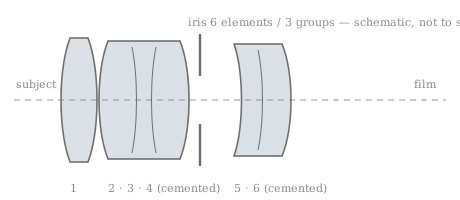
Optical formula — Sonnar type, 6e/3g
History
If one lens carried the Nikon rangefinder system, it was this one. The Nikkor-H·C 5cm f/2 was the standard lens sold on the front of Nippon Kogaku’s cameras for the system’s entire life, from the first postwar batch in September 1946 to the end of production in 1962 — serial spans summing to roughly 105,000 units across Leica thread and Nikon S mounts. Its six-element Sonnar design is even older than that: it was finished around 1935 for the Hansa Canon, which makes this the rare lens whose history runs from the dawn of the Japanese 35mm camera to the twilight of the rangefinder era.
The design belongs to Saburo Murakami (村上三郎), who computed it in the mid-1930s era of hand-cranked calculators, when tracing a single ray took five to ten minutes. It is a Sonnar type, six elements in three groups, with a cemented triplet uniting elements 2 through 4. The postwar restart nearly undid it: within about a year of resuming production, Nippon Kogaku’s stock of optical glass ran out, and Murakami had to redesign the lens twice between 1946 and 1948, juggling glass types to match whatever could actually be melted, before stable glass supply let him settle the final recipe in 1948.
The product chronology has three defensible birthdays: the ~1935 design for the Hansa Canon, the postwar Leica-thread product of 1946, and its arrival on Nippon Kogaku’s own system with the Nikon I in March 1948. (It was not quite the first postwar Nikkor — the collapsible 5cm f/3.5 of December 1945 holds that title.) The barrel evolved from collapsible (1946) through a curious semi-rigid transition — the November 1948 batch was built with collapsible mechanics but factory-fitted with a blocking sleeve between head and base — to the definitive rigid barrel of August 1950, whose 5008 batch code dates it under the early year-month serial scheme.
For collectors the long run is the richest serial-note territory in the system: “Tokyo” front markings give way to “Japan” mid-way through the chrome run at ~621800; occupation-era lenses lack aperture click stops; the black barrel arrives in a range that overlaps the last chrome block, so serial number alone never dates the finish; and the final black lenses drop the ·C engraving, coating having long since become universal. One negative result worth stating plainly: no MIOJ-engraved 5cm f/2 barrel is documented — “Made in Occupied Japan” appears on the caps and cases of 5cm lenses, never on this barrel.
This history is AI-written, from the sources listed at the foot of the page. Where the record is silent it says so rather than filling the gap — but no human wrote these sentences.
Example photos


More sample photos elsewhere
- Flickr tag "Nikkor-H 5cm f2" — 35+ pages of samples by many photographers (Nico V, Eriko, Chris May, and others), shot on rangefinder bodies and adapted to digital
- Matt Osborne (MrLeica.com) — "Nikkor H.C. 50mm f2 LTM lens" album: 16 sample portraits taken with the lens on digital Leica bodies (all rights reserved, link only)
- Flickr group "NIKKOR (Sonnar) 50mm Rangefinder Lenses" — ~1,000-photo pool dedicated to the vintage Sonnar-type 5cm f/1.4-f/2 Nikkors in S-mount and LTM, including the H.C 5cm f/2
These photographers keep all rights to their work — enjoy it at the source.
Sample photo wanted — shot with a Nikkor-H(·C) 5cm f/2? We'd love to feature it (with credit).
Live listings
Asking price, USD: a median of $280 across 159 fixed-price listings on 2026-09-11 (middle half $190–$520). Tracked since 2026-09-06, 2 days: unchanged from $280.
By day
| Date | Median | Middle half | Listings |
|---|---|---|---|
| 2026-09-11 | $280 | $190–$520 | 159 |
| 2026-09-06 | $280 | $190–$520 | 159 |
Asking prices from the listings scanned, not sales; junk-flagged rows and auction lots excluded; other currencies are not converted.
- Nikon 50mm F/2 Nikkor Ball Separator
- Nikon 40.5mm rangefinder bakelite cap | for RF Nikkor-H 5cm f/2 | $38 |
- Nikon Nikkor H C 5cm 50mm f/2 S Mount MF Lens Nippon Kogaku 9289
- [Exc+5] Nikon Nikkor H C 5cm 50mm f/2 S Mount MF Lens Nippon Kogaku From JAPAN
- Nippon Kogaku Nikon Nikkor H.C 5cm 50mm f/2 Lens LTM L39 #1380
- Nikon Nippon Kougaku NIKKOR-H.C 5cm f/2 S Mount MF Lens Excellent Japan #85304
- [Exc+5] Nikon Nippon Kogaku Nikkor-H.C 5cm 50mm f/2 Lens for S Mount from JAPAN
- [Exc+5] Nippon Kogaku Nikkor-H C 5cm F2 From JAPAN
- [Exc+5] Nippon Kogaku Nikon Nikkor-H 5cm 50mm f/2 Lens for S mount from JAPAN
- Nippon Kogaku Nikkor H C 50mm 5cm f/2 L39 Lens from Japan #6-3 2933304
- Nippon Kogaku Nikon Nikkor H.C 5cm 50mm f/2 LTM L39 Lens From JAPAN #1113
- [Almost MINT] Nikon Nippon Kogaku Nikkor H 5cm 50mm F/2 Black Lens S mount JAPAN
- NIKKOR-H.C 5cm f2 Nippon Kogaku NIKON S mount #726343 kjm 158-30-4 250418
- [Exc+5] Nikon Nikkor-H.C 5cm 50mm f/2 RF Lens For S Mount From JAPAN
- [Exc+++++] Nikon Nikkor H.C 5cm 50mm f/2 S Mount Lens Nippon Kogaku From JAPAN
- [Exc+5] NIKKOR-H NIKON S 5cm 50mm f2 Nippon Kogaku lens from JAPAN
- [Exc+3 READ] Nippon Kogaku Nikon Nikkor H.C 5cm 50mm f/2 Black Belt LTM L39 JP
- [Exc+3] Nippon kogaku Nikkor H C 5cm F/2 Late model Leica L39 Lens Form Japan
- [Exc+5] Nikon Nippon Kogaku Nikkor H.C 5cm f2 50mm Lens for S Mount from Japan
- [MINT] Nikon Nippon Kogaku Nikkor H.C 50mm 5cm f/2 Lens S Mount From JAPAN
Show 305 more listings
- 【N MINT LTM L39】 Nikon Nikkor HC H.C. 50mm F/2 Lens Leica Screw Mount from JAPAN
- [N MINT] Nippon Kogaku Nikon Nikkor H.C 5cm 50mm f/2 MF L39 LTM Lens from Japan
- [MINT] Nikon Nippon Kogaku Nikkor H.C 50mm 5cm f/2 MF Lens S Mount From JAPAN
- [Exc+5] Nippon Kogaku Nikkor H.C HC 50mm 5cm f2 Lens L39 Mount From JAPAN
- Black Belt [NEAR MINT] Nikon Nikkor-H C H.C 5cm 50mm f2 L39 LTM Lens From JPN
- Nippon Kogaku NIKKOR-H C 5cm 50mm f/2 Leica L39 LTM
- Black Belt ! [Vintage Near MINT] Nikon Nikkor-H.C 5cm 50mm F2 L39 From JAPAN
- Video*[N MINT] Nikon Nippon Kogaku NIkkor H 5cm 50mm F/2 S Mount JP1 #1 day ship
- Nikon NIKKOR H 5cm F2 Lens From JAPAN
- NIKKOR-H.C 5cm 50mm f2 Nippon Kogaku Lens NIKON S mount f/2 Excellent+5 #0517
- Nikon Nikkor H.C 5cm 50mm f2 Nippon Kogaku Leica LTM mount Tower
- Tested [ A MINT ] Nippon Kogaku Nikkor H.C HC 50mm 5cm f/2 Lens L39 Japan #3046
- [Near MINT] Nippon Kogaku Nikkor-H.C 5cm 50mm F/2 Lens for Leica L39 Black Belt
- Nikon Nikkor-H.C 5cm F/2 lens for rangefinder (S NO.: 734341)
- Rare! Black Belt Nikon Nikkor H.C 5cm 50mm F2 L39 LTM Japan #317
- [Exc+5] Nikon Nippon Kogaku Nikkor-H.C. 5cm f/2 Lens LTM M39 From JAPAN
- Black Belt [Near MINT] Nippon Kogaku Nikkor-H 5cm 50mm F2 Lens S mount JP #832
- Video*[Exc+5] Nikon Nikkor-H.C 5cm 50mm f/2 Lens l39 leica L JAPAN 1day ship #02
- [Exc+5] Nikon Nikkor H.C 5cm 50mm f/2 LTM L39 Leica Lens From JAPAN #3422
- [Near MINT+] Nikon Nippon Kogaku Nikkor-H.C 5cm f/2 Black Lens For S From JAPAN
- Nikon Nippon Kogaku NIKKOR H C 5cm 50mm F2 Black Band Leica L39 Mount
- [MINT] Nippon Kogaku Nikkor-H 5cm 50mm f/2 S Mount Standard Lens From JAPAN
- Nikon NIKKOR-H C 5cm f/2 RF mount
- Nippon kogaku Nikkor H.C 5cm 50mm f/2 L39 MF Lens
- Nikon Nikkor H 5cm 50mm f2 S Mount Lens black
- Black Belt CLA'd [ALMOST MINT] Nikon Nikkor H.C 50mm f/2 Lens L39 LTM Leica L
- Nikon Nikkor H 5cm 50mm f2 S Mount Lens black
- Nikon NIKKOR-H 5cm 50mm F2 L39 Leica Mount 2607003
- Nikon Nippon Kogaku NIKKOR-H C 5cm 50mm F2 Leica L39 Mount
- "Near Mint" Nikon Nikkor H C 5cm F/2 MF Lens Black Belt For L39 LTM Mount # 2570
- [MINT] Nippon Kogaku Nikon Nikkor H.C 5cm 50mm f/2 For Nikon S from JAPAN
- Video*[N MINT] Nikon Nikkor-H.C 5cm 50mm f/2 Lens l39 leica L JAPAN # 1 day ship
- [Almost MINT] Nikon Nippon Kogaku Nikkor H.C HC 5cm 50mm f/2 Lens S Mount JAPAN
- NipponKogaku NIKKOR-H C 5cm F2 L Mount Lens
- Nikon Nippon Kogaku NIKKOR-H C L39 5cm 50mm F2 Lens Vintage Manual Focus Japan
- Nikon Nippon Kogaku NIKKOR H C 5cm 50mm f/2 L39 LTM
- Nikon Nikkor-H 5cm f2 LTM Leica Thread Mount Rangefinder Lens
- Nippon Kogaku Nikkor H.C 50mm 5cm f2 Lens Leica LTM L39 S Rangefinder Tested
- Nikon S #6121577, chrome, Nikkor-H 5cm/2 chrome #645554, non-working shutter, Ex/Ex-
- Nikon NIKKOR-H C 5cm 50mm F/2 50/2 S Mount Lens Nippon Kogaku JAPAN Tested Works
- Nikon NIKKOR-H C 5cm F2 Lens Excellent Condition Smooth Functionality
- Nikkor H.C 5cm F/2 Leica L Mount Lens Prime
- Nikon NIKKOR-H 5cm 50mm F2 L39 Leica Mount Old Lens Used From Japan
- Nikkor-H 5cm F2 Black Band Leica L Mount Lens
- Black Belt [MINT] Nikon Nikkor H C 5cm 50mm f/2 Lens L39 Mount From JAPAN
- Black Belt [Almost MINT] Nikon Nippon Kogaku Nikkor H.C 5cm 50mm F/2 Lens L39 JP
- "Top Mint" Nikkor H C 5cm 50mm F2 MF Lens Leica LTM L39 Screw Mount From JP 2572
- Black Belt [Almost MINT] Nippon Kogaku Nikkor H.C 5cm f/2 Lens LTM L39 Japan
- Nikon NIKKOR-H・C 5cm 50mm F2 Black Band L39 Leica Mount 2510059
- Nicca IIIA with Nippon Kogaku Nikkor- H. C 5cm F2 Lens & case
- Nikon Nikkor-H C 5cm F2 Leica L Mount Lens e17612
- Nikon Nikkor-H 5cm F2 Leica L Mount Lens Return Guarantee e13761
- Nippon Kogaku NIKKOR H.C 5cm f 2 Lens
- [Near MINT] Nikon Nikkor-H.C HC 50mm 5cm F/2 Black Belt Leica L39 LTM JAPAN Fast
- [Near Mint++] Nikon Black Belt Nikkor H.C 5cm 50mm F/2 Leica LTM L39 lens Japan
- [RARE! N.MINT++ Black Belt] Nikon Nikkor H.C 5cm 50mm F2 Leica L39 LTM JAPAN
- Nikon Nippon Kogaku NIKKOR H C 5cm 50mm F2 Black Dial Leica L39 Mount
- Nikon S 35mm Rangefinder film camera. Nikkor-H-C 5cm f/2 lens. NON-WORKING
- Nikon Nippon Kogaku NIKKOR H C 5cm 50mm F2 Black Dial Leica L39 Mount
- Nikon Nikkor H 5cm F2 Leica L Mount Lens
- Black Belt[Exc+5]Nippon Kogaku Nikon Nikkor H C 5cm 50mm F/2 L39 for Nicca JAPAN
- Nikon NIKKOR-H C 5cm 50mm F2 Black Band L39 Leica L Mount Lens Excellent
- Black Belt "NEAR MINT" Nikon Nikkor H.C HC 50mm 5cm f/2 Leica LTM L39 Lens JAPAN
- Black Belt "Near Mint" Nikon Nikkor H.C HC 5cm 50mm F/2 LTM L39 From JAPAN
- Nikon NIKKOR-H.C 5cm f/2 MF Prime Lens Nikon S Mount from Japan
- Nikon NIKKOR-H C 5cm f2 50mm L39 Mount Camera Lens Tested Condition
- [Near Mint] Nicca 3-F Rangefinder Film Camera w/ Nikkor H.C 5cm 50mm f/2 #3132
- [Near MIN] Nikon Nikkor H 50mm 5cm f2 Lens for Leica Screw LTM L39 From JAPAN
- Nikon Nikkor H C 5cm F2 Black Belt Leica L39 Lens Excellent Condition
- Vintage Nikon S Rangefinder Camera Nikkor-H.C 5cm f/2 Lens 35mm Untested
- Nippon Kogaku Japan Optical NIKKOR H C F/2 5cm 50mm L-mount Leica LTM39 Lens
- 【Refurbished Excellent Condition】 Nippon Kogaku NIKKOR H.C 5cm F2 S-mount Lens
- Zeiss Ikon Contax IIa Color Dial rangefinder film camera Nikkor-H.C 5cm f2 Lens
- [EXC+5] Nippon Kogaku Nikkor H.C 5cm 50mm f/2 Lens Leica L39 Mount From JAPAN
- NIKON NIKKOR-H.C 5CM F2 Lens - Vintage Prime Lens
- [Near Mint] Nicca 3-F Nikkor-H-C 5cm f/2 Vintage 35mm Film Camera from Japan
- All Black Nikkor-H 5cm f/2 Lens Nippon Kogaku 50mm Nikon S S2 Rangefinder Rare!
- NIKKOR-H.C 5cm F2 L Mount Classic Prime Lens with Accessories
- [Top MINT] Nicca IIIS 3S 3-s III-s Body w/ Nikon Nikkor H C 50mm 5cm f/2 L39
- NIKON NIKKOR-H.C 5cm F2 Standard Lens - Vintage Quality
- Nicca IIIa with Nippon Kogaku Nikkor-H. C 5cm f2 Lens & Case Good Working Order
- Nikon S Rangefinder Film Camera W/ Nikkor-H.C 5cm 50mm F2 Lens
- 【EXC +5】 Nikon S2 Rangefinder Sliver film Camera Nikkor H.C 5cm 50mm f/2 JAPAN
- Nikon Nikkor-H C 5cm F2 Leica L Mount Lens e17599
- Nikon NIKKOR-H 5cm F2 Lens L39 for Vintage Cameras Great Condition
- [Near MINT] Nikon S2 Rangefinder Camera Body Nikkor-H.C HC 50mm 5cm F2 F/2 JAPAN
- Late [N MINT-] Nikon S2 Rangefinder Film Camera Nikkor-H 5cm 50mm f/2 Lens JAPAN
- CLA'd【N MINT+++】 Nikon S2 Rangefinder Film Camera Nikkor-H.C 5cm 50mm f/2 JAPAN
- [ Near MINT ] Nikon S2 late Black Dial Rangefinder Nikkor-H.C 5cm f/2 From JAPAN
- 【RARE N.MINT】Black Ring Nippon Kogaku Nikon Nikkor-H 5cm F2 Leica Lens Japan 897
- 【 N MINT-】Nikon S2 35mm Film Camera Nikkor H.C 5cm 50mm f/2 Lens
- Nikon Nikkor-H 5cm F2 Standard Prime Lens L39 Silver Nippon Kogaku from Japan
- [Near MINT] Nikon S2 Rangefinder Film Camera Nikkor-H.C 5cm 50mm f/2 Lens JAPAN
- NIKON NIKKOR-H C 5cm F2 Vintage Lens
- Rare [N Mint In Box] Nicca 3-F Nippon Kogaku NIKKOR-H C 5cm 50mm F2 Lens JAPAN
- Black Dial [US Duty Paid] Nikon S2 35mm Rangefinder Nikkor-H.C 5cm f2 JAPAN #472
- [Vintage Almost MINT+] Nikon S4 Rangefinder Film Camera / Nikkor H 5cm f2 JAPAN
- Nikon S4 Rangefinder / Nippon Kogaku NIKKOR-H 5cm 50mm f/2
- [Excellent+] Nikon S2 Early Model Silver Rangefinder + NIKKOR-HC 5cm f/2 10745
- DDP US [Repaint] Nikon S Rangefinder Film Camera Nikkor-H.C 5cm F2 From JAPAN
- Nikon Rangefinder Camera Body w/ NIKKOR-H.C 5cm F2 From JAPAN
- Vintage Tower Type-3S 35mm Rangefinder Camera + Nikkor-H.C 5cm f/2 + accessories
- READ! [Near MINT+] Nikon S3 Body Nikkor-H 5cm 50mm f/2 Rangefinder Camera Japan
- DDP US [Repaint] Nikon S Rangefinder Film Camera Nikkor-H.C 5cm F2 From JAPAN
- Late Black Dial [MINT] Nikon S2 Film Camera Nikkor H.C 5cm 50mm f/2 Lens JAPAN
- Nikon Nikkor-H C 5cm F2 for Leica L Mount 737110
- 【Excellent Working Condition】 NIKON Nikon S + NIKKOR H.C 5cm F2 Lens Set Camera
- [Near MINT] Nicca 3-F Rangefinder Film Camera w/ NIKKOR-H.C 5cm F2 LTM L39 #458
- Nikon S4 Rangefinder 35mm Camera w/ Nikkor-H 5cm 50mm f/2 Lens & Case From JAPAN
- Vintage Nikon S2 Rangefinder Film Camera Nikkor H.C 5Cm 50mm f/2 Lens
- Nikon S Camera with NIKKOR H.C 5cm F2 Lens Excellent Condition
- Read 【Exc+5】 Nikon S4 Rangefinder Film Camera Nikkor H 5cm f/2 Lens From JAPAN
- Nikon S3 #6308929, c.1958, chrome, Nikkor-H 5cm/2 black #749543, CLA'd 2025, Ex/Ex+
- [MINT in Box] Nikon S4 Rangefinder Camera + Nikkor H 5cm f/2 Lens From JAPAN
- **MINT** Nikon S4 Rangefinder Film Camera w/ Nikkor-H 5cm F2 Lens From JAPAN
- ULTRA RARE All black NIKKOR-H 5cm F2 lens for Nikon RF.
- [Near MINT] NICCA III L Rangefinder 35mm Camera Nikkor-h 5cm f2 JAPAN #821
- [MINT w/CASE] NICCA III L Rangefinder 35mm Camera Nikkor-h c 5cm f2 From JAPAN
- [MINT] Nicca III L 35mm Film Camera + Nikkor H 5cm 50mm f2 Lens From JAPAN
- [CLA/AB Exc+] Nikon MS Red Sync Rangefinder Camera, NIKKOR-H.C 5cm f/2 Lens 9503
- [NEAR MINT in Box] Nikon S4 Rangefinder Film Camera Nikkor-H.C 5cm f2 Lens Japan
- Rare EP [Top MINT] Nikon S4 Black Repainted Rangefinder w/ Nikkor H 5cm f2 Japan
- Rare!!![MINT] Nikon S4 Black Repainted Rangefinder Nikkor H 5cm f2 From Japan
- [ Top MINT in Box ] Nikon S4 Rangefinder Film Camera Nikkor H 5cm f/2 Lens JAPAN
- Nippon kogaku Nikkor H C 5cm F2 Collapsible LTM39 Lens, Very Rare From JP
- Nikon NIKKOR-H.C 5cm F2 Collapsible Lens Leica L39 LTM Mount from Japan E0705
- Nippon Kogaku Tokyo Chrome Nikkor-H C Collapsible 5cm f2 SM LTM S#: 811xxx
- SN 621xxxx [Almost Unused] Nikon SP Rangefinder Nikkor-H 5cm 50mm F/2 From JAPAN
- 【Rare!MINT】Meguro Opt Japan Melcon II Rangefinder Camera w/ Nikkor H.C 5cm f/2
- Nikon NIKON Nippon Kogaku Tokyo NIKKOR-H.C F2 5cm Early #3373
- Nippon kogaku Nikkor H C 5cm F2 Collapsible LTM39 Lens, Super Rare From JP#7086
- Nikon MS Red Sync Model + Nikkor H.C 5cm F/2 35mm Rangefinder Camera Rare Exc+++
- Leica M Typ 240 Black 24MP Rangefinder Nikkor-H.C 5cm f/2 Lens Box Kit
- Nikon S2 Black Rangefinder w/ Nikkor-H.C 5cm f2 Lens Tested Working JP
- Rare Nikkor H C 5cm F/2 Collapsible Lens Early Serial L39
- Nikon S2 Black + Nikkor-H C 5cm F2 Rangefinder Camera Set – Beautiful Optics
- Vintage MINT Nippon Kogaku Nikon M Rangefinder Camera w Nikkor H C 5cm F2 JAPAN
- Nippon Kogaku No Sync Nikon M RF Camera & Nikkor H 5cm 50mm f/2 collapsible lens
- [RARE S/N 621××××] Nikon SP original Black Nikkor-H.C 5cm F2 Nippon Kogaku JAPAN
- Nikon MF Lens Lot 3 Nikkor-H 5cm f/2 Zoom 43-86mm 24mm f/2.8 AI *JUNK* Japan
- [AS IS] Nippon kogaku Nikkor H.C HC 5cm 50mm F/2 L39 for Leica LTM JAPAN G 7864
- 【As-Is】Nippon Kogaku Nikkor-H.C 5cm 50mm F/2 Lens For Nikon S Mount JAPAN #544A
- NIKON Prime Lens NIKKOR-H C 5CM F2 Junk Item Parts Only
- [Exc+4] Nikon MS Black Sync Rangefinder + [AS-IS] NIKKOR-H.C 5cm f/2 #2832
- [Exc+5] Nikon Nikkor H C 5cm 50mm f/2 S Mount MF Lens Nippon Kogaku From JAPAN
- Nippon Kogaku Nikon Nikkor H.C 5cm 50mm f/2 Lens LTM L39 #1380
- Nikon Nippon Kougaku NIKKOR-H.C 5cm f/2 S Mount MF Lens Excellent Japan #85304
- Nippon Kogaku Nikkor H C 50mm 5cm f/2 L39 Lens from Japan #6-3 2933304
- [Exc+5] Nikon Nippon Kogaku Nikkor-H.C 5cm 50mm f/2 Lens for S Mount from JAPAN
- [Almost MINT] Nikon Nippon Kogaku Nikkor H 5cm 50mm F/2 Black Lens S mount JAPAN
- [Exc+5] NIKKOR-H NIKON S 5cm 50mm f2 Nippon Kogaku lens from JAPAN
- [Exc+++++] Nikon Nikkor H.C 5cm 50mm f/2 S Mount Lens Nippon Kogaku From JAPAN
- [Exc+5] Nippon Kogaku Nikon Nikkor-H 5cm 50mm f/2 Lens for S mount from JAPAN
- [Exc+5] Nikon Nikkor-H.C 5cm 50mm f/2 RF Lens For S Mount From JAPAN
- [Exc+3 READ] Nippon Kogaku Nikon Nikkor H.C 5cm 50mm f/2 Black Belt LTM L39 JP
- [Exc+3] Nippon kogaku Nikkor H C 5cm F/2 Late model Leica L39 Lens Form Japan
- Tested [ A MINT ] Nippon Kogaku Nikkor H.C HC 50mm 5cm f/2 Lens L39 Japan #3046
- [Exc+5] Nikon Nikkor H.C 5cm 50mm f/2 LTM L39 Leica Lens From JAPAN #3422
- Nikon Nippon Kogaku NIKKOR H C 5cm 50mm F2 Black Band Leica L39 Mount
- Black Belt [Near MINT] Nippon Kogaku Nikkor-H 5cm 50mm F2 Lens S mount JP #832
- Video*[Exc+5] Nikon Nikkor-H.C 5cm 50mm f/2 Lens l39 leica L JAPAN 1day ship #02
- [N MINT] Nippon Kogaku Nikon Nikkor H.C 5cm 50mm f/2 MF L39 LTM Lens from Japan
- [Exc+5] Nippon Kogaku Nikkor H.C HC 50mm 5cm f2 Lens L39 Mount From JAPAN
- Black Belt ! [Vintage Near MINT] Nikon Nikkor-H.C 5cm 50mm F2 L39 From JAPAN
- Black Belt CLA'd [ALMOST MINT] Nikon Nikkor H.C 50mm f/2 Lens L39 LTM Leica L
- Nikon NIKKOR-H 5cm 50mm F2 L39 Leica Mount 2607003
- Video*[N MINT] Nikon Nippon Kogaku NIkkor H 5cm 50mm F/2 S Mount JP1 #1 day ship
- Nikon Nippon Kogaku NIKKOR-H C 5cm 50mm F2 Leica L39 Mount
- Nikon NIKKOR H 5cm F2 Lens From JAPAN
- [Near MINT] Nippon Kogaku Nikkor-H.C 5cm 50mm F/2 Lens for Leica L39 Black Belt
- Video*[N MINT] Nikon Nikkor-H.C 5cm 50mm f/2 Lens l39 leica L JAPAN # 1 day ship
- [Almost MINT] Nikon Nippon Kogaku Nikkor H.C HC 5cm 50mm f/2 Lens S Mount JAPAN
- NipponKogaku NIKKOR-H C 5cm F2 L Mount Lens
- [MINT] Nippon Kogaku Nikon Nikkor H.C 5cm 50mm f/2 For Nikon S from JAPAN
- Nikkor H.C 5cm F/2 Leica L Mount Lens Prime
- Black Belt [Almost MINT] Nikon Nippon Kogaku Nikkor H.C 5cm 50mm F/2 Lens L39 JP
- Nikkor-H 5cm F2 Black Band Leica L Mount Lens
- Black Belt [Almost MINT] Nippon Kogaku Nikkor H.C 5cm f/2 Lens LTM L39 Japan
- Nikon NIKKOR-H・C 5cm 50mm F2 Black Band L39 Leica Mount 2510059
- Nikon Nikkor-H C 5cm F2 Leica L Mount Lens e17612
- [Near MINT] Nikon Nikkor-H.C HC 50mm 5cm F/2 Black Belt Leica L39 LTM JAPAN Fast
- Nikon Nikkor-H 5cm F2 Leica L Mount Lens Return Guarantee e13761
- NIKON OBJEKTIV NIKKOR-H C 5CM f2 gebraucht
- [Near Mint] Nicca 3-F Rangefinder Film Camera w/ Nikkor H.C 5cm 50mm F/2 #3132
- All Black Nikkor-H 5cm f/2 Lens Nippon Kogaku 50mm Nikon S S2 Rangefinder Rare!
- Nikon Objektiv ohne Rand NIKKOR-H.C 5CM f2 gebraucht
- [Top MINT] Nicca IIIS 3S 3-s III-s Body w/ Nikon Nikkor H C 50mm 5cm f/2 L39
- NIKON NIKKOR-H.C 5CM F2 Lens - Vintage Prime Lens
- [Near Mint] Nicca 3-F Nikkor-H-C 5cm f/2 Vintage 35mm Film Camera from Japan
- NIKON NIKKOR-H.C 5cm F2 Standard Lens - Vintage Quality
- NIKON Standard Medium Tele Single-Focus Objektiv NIKKOR-H.C 5cm f2 gebraucht
- Nikon Nikkor-H C 5cm F2 Leica L Mount Lens e17599
- [EXC+++++] Nikon S2 Late Black Dial Rangefinder Nikkor-H 5cm f/2 Lens From JAPAN
- [Near MINT] Nikon S2 Rangefinder Camera Body Nikkor-H.C HC 50mm 5cm F2 F/2 JAPAN
- [ Near MINT ] Nikon S2 late Black Dial Rangefinder Nikkor-H.C 5cm f/2 From JAPAN
- Nikon Nikkor-H 5cm F2 Standard Prime Lens L39 Silver Nippon Kogaku from Japan
- NIKON NIKKOR-H C 5cm F2 gebraucht
- Black Dial [US Duty Paid] Nikon S2 35mm Rangefinder Nikkor-H.C 5cm f2 JAPAN #472
- NIKON NIKKOR-H C 5cm F2 Vintage Lens
- [Near MINT] Nikon S2 Rangefinder Film Camera Nikkor-H.C 5cm 50mm f/2 Lens JAPAN
- 【N NEUWERTIG-】Nikon S2 analoge Kleinbildkamera Nikkor H.C 5cm 50mm f/2 Objektiv
- Nikon Rangefinder Camera Body w/ NIKKOR-H.C 5cm F2 From JAPAN
- Late Black Dial [MINT] Nikon S2 Film Camera Nikkor H.C 5cm 50mm f/2 Lens JAPAN
- [Near MINT] Nicca 3-F Rangefinder Film Camera w/ NIKKOR-H.C 5cm F2 LTM L39 #458
- Nikon S Camera with NIKKOR H.C 5cm F2 Lens Excellent Condition
- Nikon S4 Rangefinder 35mm Camera w/ Nikkor-H 5cm 50mm f/2 Lens & Case From JAPAN
- **MINT** Nikon S4 Rangefinder Film Camera w/ Nikkor-H 5cm F2 Lens From JAPAN
- [MINT in Box] Nikon S4 Rangefinder Camera + Nikkor H 5cm f/2 Lens From JAPAN
- [Near MINT] NICCA III L Rangefinder 35mm Camera Nikkor-h 5cm f2 JAPAN #821
- [MINT w/CASE] NICCA III L Rangefinder 35mm Camera Nikkor-h c 5cm f2 From JAPAN
- [NEAR MINT in Box] Nikon S4 Rangefinder Film Camera Nikkor-H.C 5cm f2 Lens Japan
- Rare EP [Top MINT] Nikon S4 Black Repainted Rangefinder w/ Nikkor H 5cm f2 Japan
- [ Top MINT in Box ] Nikon S4 Rangefinder Film Camera Nikkor H 5cm f/2 Lens JAPAN
- Nikon S2 Black Rangefinder w/ Nikkor-H.C 5cm f2 Lens Tested Working JP
- Rare Nikkor H C 5cm F/2 Collapsible Lens Early Serial L39
- Vintage MINT Nippon Kogaku Nikon M Rangefinder Camera w Nikkor H C 5cm F2 JAPAN
- Nikon S2 Black + Nikkor-H C 5cm F2 Rangefinder Camera Set – Beautiful Optics
- [RARE S/N 621××××] Nikon SP original Black Nikkor-H.C 5cm F2 Nippon Kogaku...
- NIKON Prime Lens NIKKOR-H C 5CM F2 Junk Item Parts Only
- [Exc+4] Nikon MS Black Sync Rangefinder + [AS-IS] NIKKOR-H.C 5cm f/2 #2832
- NICCA Objektivdeckel für NIKKOR-H.C 5cm F2 50mm #51813 kjm 204-36-4 260721
- [Exc+5] Nikon Nikkor H C 5cm 50mm f/2 S Mount MF Objektiv Nippon Kogaku aus J...
- Nikon Nikkor -H.C Nippon Kogaku Tokyo 5cm 50mm F 2 Telemetro One M S DIFETTOSO.
- Nippon Kogaku Nikkor H C 50mm 5cm f/2 L39 Objektiv aus Japan #6-3 2933304
- [Exc+5] Nikon Nippon Kogaku Nikkor-H.C 5cm 50mm f/2 Objektiv für S Mount aus ...
- [Fast NEUWERTIG] Nikon Nippon Kogaku Nikkor H 5 cm 50 mm F/2 schwarz Objektiv...
- [Exc+5] Nikon Nikkor-H.C 5 cm 50 mm f/2 RF Objektiv für S Mount aus JAPAN
- [Exc+5] Nippon Kogaku Nikon Nikkor-H 5cm 50mm f/2 Objektiv für S Mount aus JAPAN
- Nippon Kogaku Nikon Nikkor H.C 5 cm 50 mm f/2 LTM L39 Objektiv aus JAPAN #1113
- [Exc+3 LESEN] Nippon Kogaku Nikon Nikkor H.C 5cm 50mm f/2 Black Belt LTM L39 JP
- Nikon NIKKOR H 5cm F2 Objektiv aus JAPAN
- [Fast neuwertig] Nippon Kogaku Nikkor-H.C 5 cm 50 mm F/2 Objektiv für Leica L...
- Getestet [ A NEUWERTIG] Nippon Kogaku Nikkor H.C HC 50mm 5cm f/2 Objektiv...
- [Exc+5] Nikon Nikkor H.C 5cm 50mm f/2 LTM L39 Leica Objektiv aus JAPAN #3422
- Nikon Nippon Kogaku NIKKOR H C 5cm 50mm F2 Black Band Leica L39 Mount
- Black Belt [Near MINT] Nippon Kogaku Nikkor-H 5cm 50mm F2 Lens S mount JP #832
- Video*[Exc+5] Nikon Nikkor-H.C 5 cm 50 mm f/2 Objektiv l39 Leica L JAPAN 1...
- [Mint] Nippon Kogaku Nikon Nikkor H.C 5cm 50mm F/2 Mf L39 Ltm Linse Aus Japan
- [N MINT] Objectif Nippon Kogaku Nikon NIKKOR-H.C 5cm f/2 50mm MF L39 LTM
- [N MINT] Nippon Kogaku Nikon Nikkor H.C 5cm 50mm f/2 MF L39 LTM Obiettivo
- Video*[N NEUWERTIG] Nikon Nippon Kogaku NIkkor H 5cm 50mm F/2 S Mount JP1...
- Nikon NIKKOR-H 5cm 50mm F2 L39 Leica Mount 2607003
- Nikon Nippon Kogaku NIKKOR-H C 5cm 50mm F2 Leica L39 Mount
- Video*[N NEUWERTIG] Nikon Nikkor-H.C 5 cm 50 mm f/2 Objektiv l39 Leica L...
- [Fast NEUWERTIG] Nikon Nippon Kogaku Nikkor H.C HC 5cm 50mm f/2 Objektiv S Mo...
- NipponKogaku NIKKOR-H C 5cm F2 L Mount Objektiv
- Nippon Kogaku Nikkor H.C 50mm 5cm f2 Objektiv Leica LTM L39 S...
- Nikon NIKKOR-H C 5cm 50mm F/2 50/2 S Mount Objektiv Nippon Kogaku JAPAN...
- Exc Nippon Kogaku NIKKOR-H 5cm 50mm F/2 Objektiv für Leica Schraubfassung *3437
- Nikkor H.C 5 cm F/2 Leica L Mount Objektiv Prime
- Nikkor-H 5cm F2 Black Band Leica L Mount Objektiv
- Schwarzer Gürtel [fast neuwertig] Nippon Kogaku Nikkor H.C 5 cm f/2...
- Nikon NIKKOR-H・C 5cm 50mm F2 Black Band L39 Leica Mount 2510059
- NIKON Prime Objektiv NIKKOR-H C 5CM F2 Schrottartikel nur Teile
- Nikon Nikkor-H C 5cm F2 Leica L Mount Objektiv e17612
- Nikon Nikkor-H 5cm F2 Leica L Mount Objektiv Rückgabegarantie e13761
- [Near MINT] Nikon Nikkor-H.C HC 50mm 5cm F/2 Black Belt Leica L39 LTM JAPAN Fast
- Nikon NIKKOR-H C 5cm 50mm F2 Black Band L39 Leica L Mount Objektiv TOP
- Schwarzer Gürtel [NEUWERTIG mit Haube] Nikon NIKKOR H C 5cm 50mm f2 LTM L39...
- [ Near Mint ] Nicca 3-f Télémètre Caméra à Film W / Nikkor H.C 5cm 50mm F/2
- [Near Mint] Nicca 3-F Rangefinder Film Camera w/ Nikkor H.C 5cm 50mm F/2 #3132
- All Black Nikkor-H 5cm f/2 Lens Nippon Kogaku 50mm Nikon S S2 Rangefinder Rare!
- NIKON NIKKOR-H.C 5CM F2 Objektiv - Vintage Prime Lens
- [Near Mint] Nicca 3-F Nikkor-H-C 5cm f/2 Vintage 35mm Film Camera from Japan
- NIKON NIKKOR-H.C 5cm F2 Standard Objektiv - Vintage Qualität
- Nikon Nikkor-H C 5cm F2 Leica L Mount Objektiv e17599
- [EXC+++++] Nikon S2 Late Black Dial Rangefinder Nikkor-H 5cm f/2 Lens From JAPAN
- [Fast neuwertig] Nikon S2 Messsucherkamera Body Nikkor-H.C HC 50mm 5cm F2...
- Nippon Kogaku Nikkor HC 5cm f2 Rigid LTM
- [Near MINT] Nikon S2 Late Black Dial Rangefinder Nikkor-H.C 5cm f/2 From JAPAN
- Nikon Nikkor-H 5cm F2 Standard Prime Objektiv L39 Silber Nippon Kogaku aus Japan
- NIKON NIKKOR-H C 5cm F2 Vintage Objektiv
- [Fast neuwertig] Nikon S2 analoge Sucherkamera Nikkor-H.C 5 cm 50 mm f/2...
- DDP US [Repaint] Nikon S analoge Sucherkamera Nikkor-H.C 5 cm F2 aus JAPAN
- Nikon Messsucherkamera Body mit NIKKOR-H.C 5cm F2 aus JAPAN
- DDP US [Repaint] Nikon S analoge Sucherkamera Nikkor-H.C 5 cm F2 aus JAPAN
- Nikon S Kamera mit NIKKOR H.C 5cm F2 Objektiv Top Zustand
- Nikon S4 Rangefinder 35mm Camera w/ Nikkor-H 5cm 50mm f/2 Lens & Case From JAPAN
- Chiyotax IIIF 35mm Rangefinder camera w. Nippon Kogaku Nikkor HC 2/5cm lens Leica M39 Mount (LTM)
- **NEUWERTIG** Nikon S4 analoge Sucherkamera mit Nikkor-H 5 cm F2 Objektiv aus...
- [NEUWERTIG mit ETUI] NICCA III L Rangefinder 35mm Camera Nikkor-h c 5cm f2...
- Nikkor-H 2/5cm All Black
- Rare EP [Top MINT] Nikon S4 Black Repainted Rangefinder w/ Nikkor H 5cm f2 Japan
- [EXCELLENT] Nikon S3 Rangefinder + Nikkor H 5cm f/2 | FILM TESTED - WORKING
- [Top NEUWERTIG in Box] Nikon S4 analoge Sucherkamera Nikkor H 5 cm f/2...
- Nikon S chrome nice Ser. No. 6121000 with clean 2/5cm Nikkor ca. 1951
- SN 621xxxx [fast unbenutzt] Nikon SP Rangefinder Nikkor-H 5cm 50mm F/2 aus JAPAN
- Nikon S4 rangefinder 35mm camera w. Nikkor-H 2/5cm lens
- Meguro Kogaku Melcon II rare Japanese camera with Leica M39. c.1957 with 2/5cm Nikkor (LTM)
- Seltenes Nikkor H C 5cm F/2 zusammenklappbares Objektiv frühe Serie L39
- [RARE S/N 621×××] Nikon SP original Black Nikkor-H.C 5cm F2 Nippon Kogaku...
- [Exc+4] Nikon MS Black Sync Rangefinder + [AS-IS] NIKKOR-H.C 5cm f/2 #2832
- [N MINT] Nippon Kogaku Nikon Nikkor H.C 5cm 50mm f/2 MF L39 LTM Lens from Japan
- NIKON LENS NIKKOR-H C 5CM f2 Used
- [Near Mint] Nicca 3-F Rangefinder Film Camera w/ Nikkor H.C 5cm 50mm F/2 #3132
- Nikon Lens No Rim NIKKOR-H.C 5CM f2 Used
- Nikon Nippon Kogaku Nikkor-H.C 5cm 50mm f2 Lens, LTM L39 M39 Mount Rangefinder
- Nikon Nikkor-H.C 50mm f/2 LTM
- Nippon Kogaku Nikkor-H.C 50mm F2 - Nikon S Mount / 5008 — SN 50080321
- Nippon Kogaku Nikkor-H.C 50mm F2 LTM - Collapsible — SN 8112338
- Nippon Kogaku Nikkor-H.C 50mm F2 LTM - Collapsible — SN 708576
- [N MINT] Nippon Kogaku Nikon Nikkor H.C 5cm 50mm f/2 MF L39 LTM Lens from Japan
- [Near Mint] Nicca 3-F Rangefinder Film Camera w/ Nikkor H.C 5cm 50mm F/2 #3132
- Nikon 非Ai NIKKOR 50mm F/2 単焦点レンズ
- Nikon 非AI NIKKOR 50mm F2 [F]
eBay links are affiliate links. If you buy through one, Glass Bodies earns a small commission from eBay at no cost to you. It does not change which listings appear, their prices or their order — those come from the search and the sort described above.
Listings updated 2026-09-11. Links go to the shop or marketplace that carries the item.